How to Create Comparison Pages for AEO

Comparison pages have always pulled weight in B2B content marketing. Any time a buyer is narrowing down a shortlist, they run a search like “Salesforce vs HubSpot” or “Zoom vs Google Meet” and whoever owns that result is often in the room when the decision gets made.
The problem is that AI search tools have quietly rewritten how those results work, and most content teams haven’t caught up. ChatGPT, Gemini, and Perplexity don’t return a list of ten blue links when someone asks for a comparison. They synthesize an answer, pull from credible sources across the web, and often produce a feature-by-feature table on the spot.
That changes what a comparison page needs to do. This guide covers how to build comparison content that performs in AI search environments, including one underused format that gives smaller brands a real shot at visibility they’d otherwise never get.
Note: while most examples are from SaaS, these work across most industries.
Why Comparison Pages Work Differently in AI Search
When a buyer types a comparison query into an AI tool, they often get to refine it on the fly. They can say “show me which one is better for a remote team under 50 people” or “which has better customer support” and the AI reshapes the output accordingly. That kind of back-and-forth doesn’t happen in a Google results page.
Worth mentioning, is that LLMs will remember specifics about the user. ChatGPT, for example, may already know you work at a remote team with under 50 people and cater its recommendations accordingly.
Here’s what that looks like in practice. Ask ChatGPT to compare two major CRMs and instead of a list of links, you get a synthesized answer, often with a table, and pulled together from multiple sources on the fly.
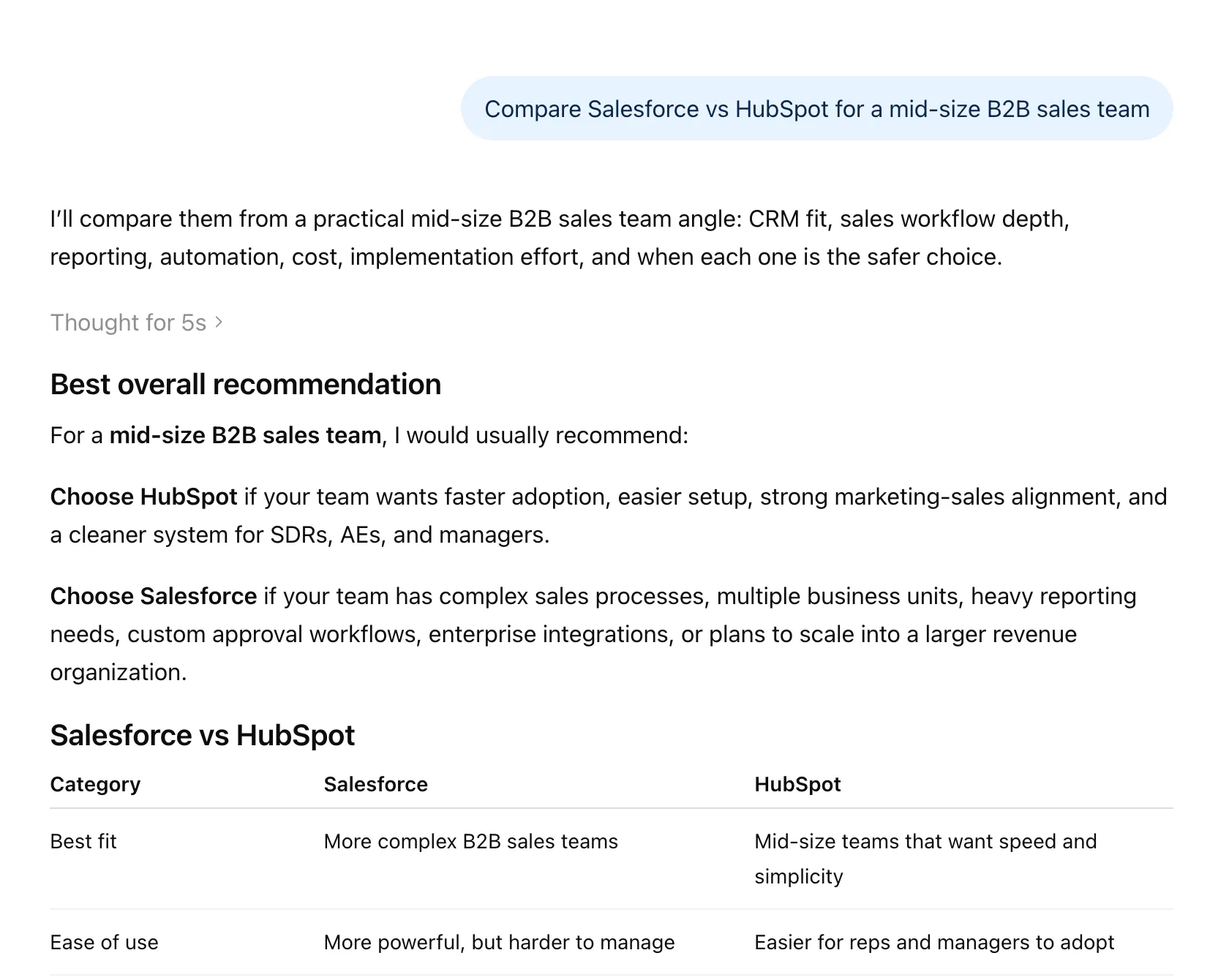
The implication for content creators is significant. Your comparison page isn’t just competing for a keyword anymore. It needs to be structured well enough for an AI to actually extract information from it, specific enough to match follow-up refinements buyers make, and authoritative enough to get cited rather than skipped.
A thin, lightly-optimized “X vs Y” page that ranks fine on Google may get completely ignored by an AI model looking for clear, well-organized information. The bar is higher now, which is actually good news for brands willing to build this content properly.
The Comparison Page Framework Rebuilt for AEO
Before getting into more advanced formats, the foundation still matters. If you don’t have direct competitor comparison pages, those should be built first.
The AEO version of these pages has a few non-negotiable elements.
- Open with a clear verdict. AI models pull from pages that give direct answers. The fastest way to signal that your page does that is to lead with a sentence that states the core difference plainly. Something like: “The main difference between [Brand A] and [Brand B] is…” This phrasing works remarkably well for both AI citations and Google featured snippets.
Run that same query in ChatGPT and you’ll see the AI follow the exact same instinct. They lead with a direct statement before getting into details.
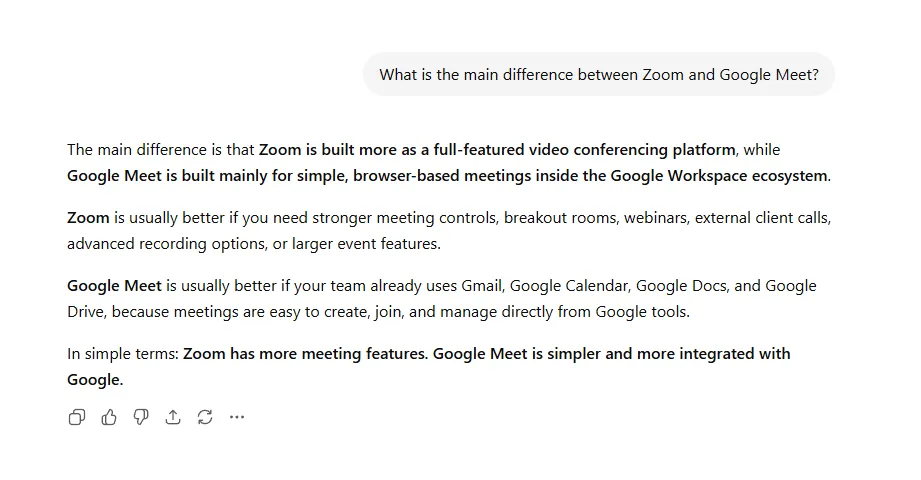
That’s the structure your page should mirror. If an AI reading your page can’t extract a clear answer from the opening paragraph, it will move on to a source that can.
- Use a comparison table and actually fill it out. A table with five rows and vague checkmarks isn’t useful to anyone. Cover the dimensions buyers actually weigh: pricing tiers, integration ecosystem, onboarding complexity, support access, scalability. Make the table specific enough that someone could make a real decision from it. For a strong example of what a well-built table looks like in practice, Zapier’s HubSpot vs Salesforce breakdown is one of the better neutral comparisons on the web. It is also getting some decent citations according to Ahrefs data.
- Write out the nuances under each feature. Tables summarize, but buyers need context. If your platform has better customer support but only on paid plans, say so. If a competitor has more integrations but a steeper learning curve, explain that tradeoff. The detail is what makes a page citable.
- Build in sections that match how buyers refine their searches. Think about the follow-up questions your buyer would actually ask: “Which is better for enterprise teams?” “Which is easier to switch to?” “Which scales without getting expensive?” Write those as actual headers, not buried thoughts in a long paragraph. AI models read headers and pull answers from the sections beneath them.
A word of advice on your comparison pages: be objective. I’ve seen brands get roasted on LinkedIn for showcasing their competitors in a poor light. That’s bad class and is a recipe for retaliation. Plus consumers know that not every brand will have every single feature and benefit they want. Highlight what you’re best at and be honest where a competitor may have a stronger position.
The Three-Way Comparison Page
This is the strategy most brands haven’t touched, and it’s worth real attention.
The fundamental challenge for any growing brand is visibility in conversations you were never invited to. If you sell project management software, someone asking an AI “what’s the best tool for managing creative workflows?” might get an answer that never mentions you, not because you’re a bad fit, but because the AI had nothing to cite that put you in the frame.
Three-way comparison pages solve this by giving AI tools a reason to surface your brand in queries that weren’t about you to begin with.
When a user asks Perplexity or ChatGPT a category-level question like “best CRM for accounting teams” or “top project management tools for agencies,” the AI pulls from pages that cover multiple options comprehensively. A well-built three-way comparison page that includes your brand alongside two dominant competitors becomes a natural citation source for those open-ended queries. You weren’t in the original question. You get in the answer anyway.
The same mechanism fires on two-way queries. When someone asks an AI to compare two specific brands, a page that covers those two and introduces a strong third option is often more useful to the AI than a page covering only the two.
You can see this in the men’s health space. Search “Hims vs Roman” in Perplexity and the top citation pulled is a three-way comparison page covering Hims, Roman, and Keeps. Nobody asked about Keeps. The query was a straight two-brand prompt. But because that three-way page was the most comprehensive answer available, Keeps got factored into the response.
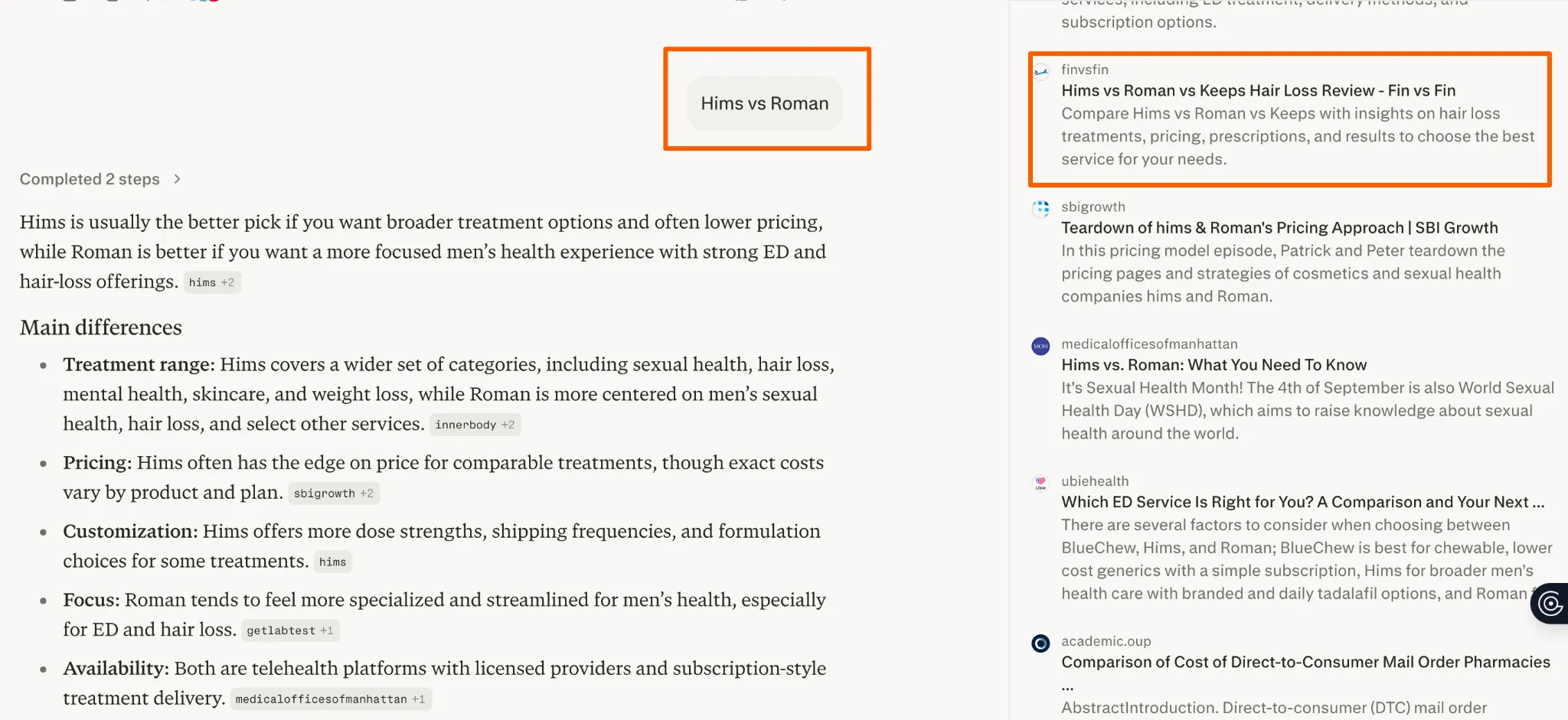
That’s the outcome this strategy is built around. Keeps enters a conversation that Hims and Roman started, not by outranking them on a head-to-head page, but by being the source that gave the AI the most complete answer.
The page also followed rule number 2 above, the structured comparison table.
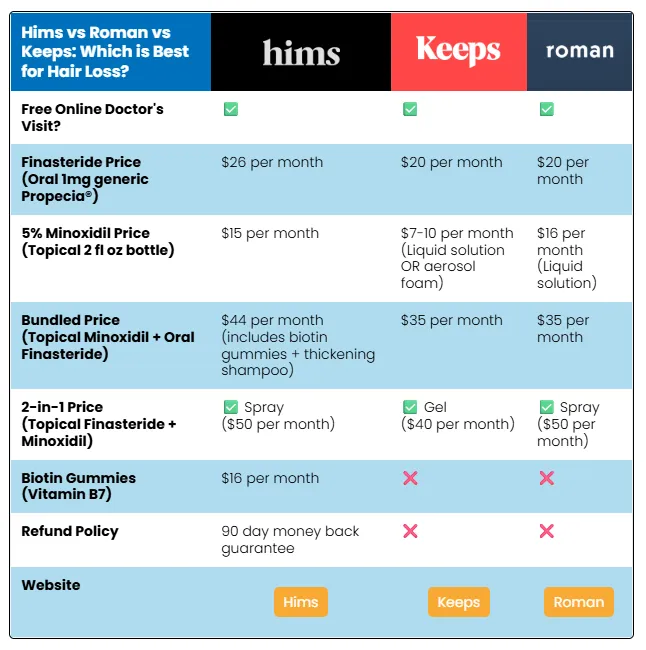
This isn’t exclusive to health and wellness. The same dynamic plays out across consumer product categories and B2B software wherever three-way comparison content is the most thorough thing available on a given query.
The reason it works comes down to what AI search is optimizing for. A page covering two products answers a two-way query. A page covering three products answers a two-way query and every open-ended category query where all three brands are relevant. More coverage means more citation surface and more conversations your brand walks into without being called by name.
It also happens to be largely unclaimed territory. Most content teams build two-way comparisons and stop. The three-way combinations for any competitive category represent an enormous amount of indexable, citable content that competitors haven’t written yet.
Getting the combinations right without losing your mind
If your competitive landscape includes eight or ten major players, the number of three-way combinations gets large fast. The math works against you if you try to figure it out manually.
A simple spreadsheet built to auto-generate combinations from a brand list handles this without the headache. You input your brand and your competitors, and the sheet produces every unique two-way and three-way pairing, filtered so you don’t end up with redundant versions of the same matchup. That output becomes your content roadmap.
Vertical-Specific Comparison Pages
Once your core comparison pages are in place, there’s a layer worth adding: comparisons built around specific industries or buyer types rather than features alone.
AI search tools respond to buyer intent in ways that keyword-matched Google results don’t. A buyer who asks “which CRM is better for a recruiting firm” is not going to get the same answer as someone who just asks “which CRM is better.” The AI adjusts based on context, and your content needs to be there to match that context.
This applies well outside SaaS too. A query like “QuickBooks vs FreshBooks for a restaurant” produces a meaningfully different answer than a generic accounting software comparison, because the industry changes which features matter most (inventory, tips, shift-based payroll). Any brand in that space that has built a restaurant-specific comparison page owns that conversation.
Here’s an example citation pulled for that query in ChatGPT:
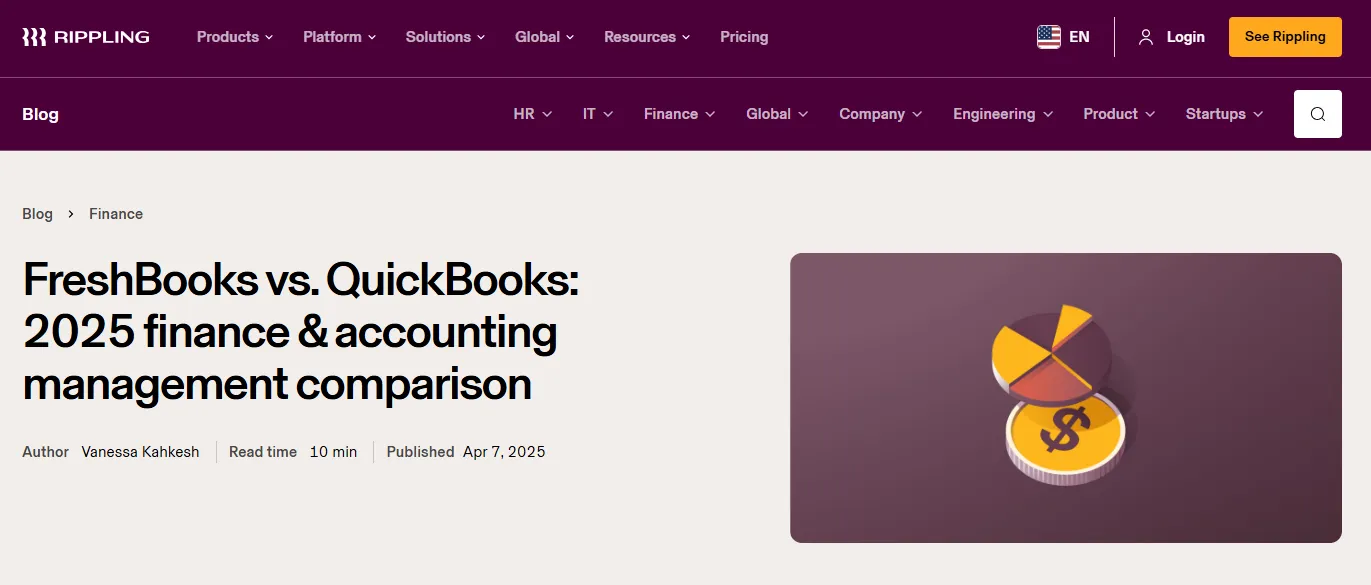
The vertical expansion of your comparison content takes more time to produce, but the targeting is precise in a way that generic pages can’t match. For any brand that serves multiple industries, this is one of the highest-leverage content investments available right now.
Comparison Pages That Don’t Feature Your Brand in the Title
There’s a fourth format worth including in your comparison page strategy, and it might be the least intuitive: writing comparison pages between two competitors where your brand doesn’t appear in the headline at all.
The idea is straightforward. You write an honest, thorough comparison of two rivals, optimized for the query those rivals are already being searched for, and you mention your product in the body as an alternative worth considering. Your brand gets exposure inside a conversation dominated by bigger names, without needing to win a head-to-head matchup against either of them.
Search “Calendly vs Acuity” in Perplexity and the top cited sources aren’t Calendly or Acuity. They’re Koalendar, Fluentbooking, and Schedly, three competing scheduling tools that each wrote their own breakdown of the two dominant players and got pulled into the answer. None of them are named in the query. All three are in the citations.
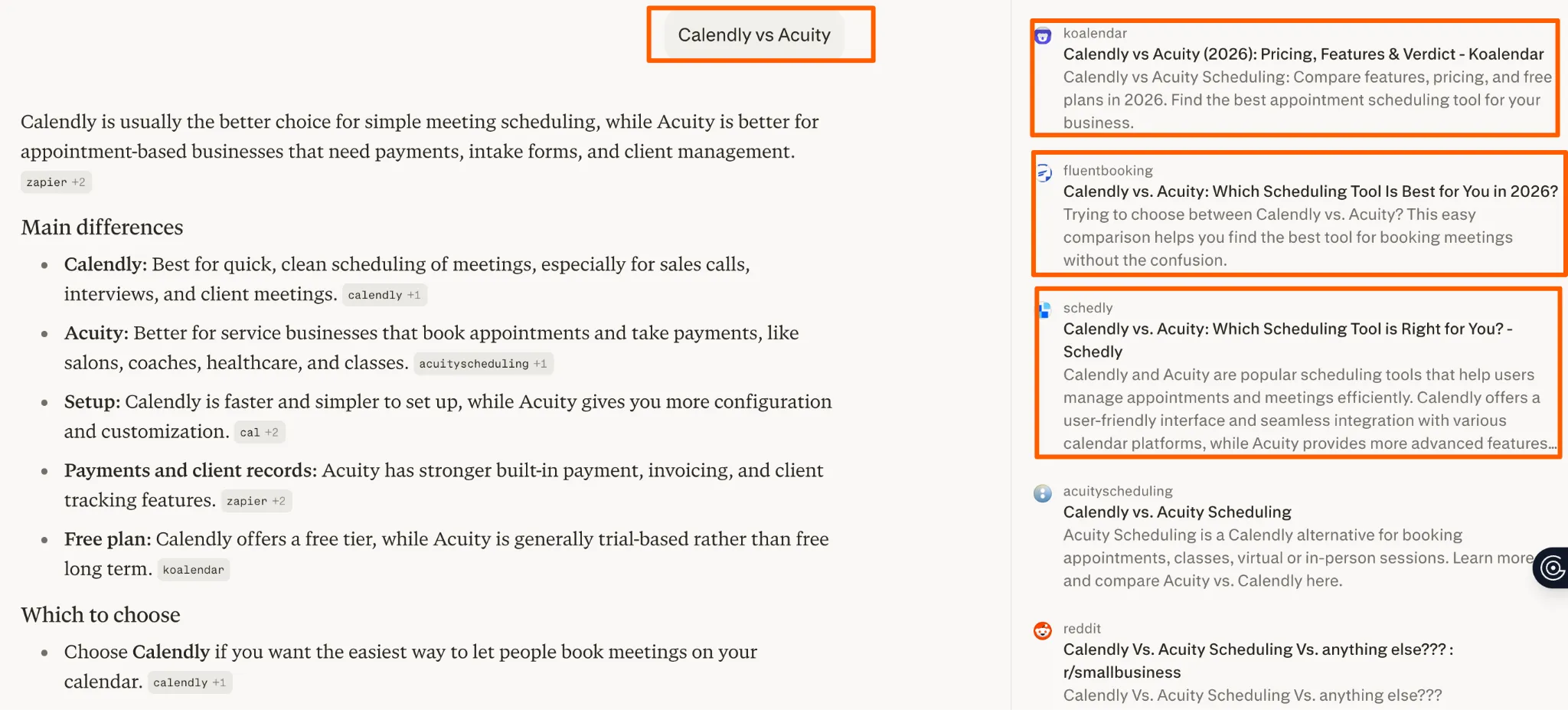
That’s the outcome. A buyer searching for a comparison between two tools they already know ends up reading a page published by a third tool they didn’t know to look for.
This format performs well in AI search for the same reason the three-way page does. AI models want to give buyers complete information. A comparison page that covers two established options and surfaces a credible third alternative is often more useful to the model than one that only covers two. Useful sources get cited.
The content has to be genuinely good to earn that position. A thin or transparently promotional “Competitor A vs Competitor B” page won’t get pulled. But a page a buyer would actually find valuable can consistently appear in AI-generated answers to queries that never include your name.
A Practical Checklist Before You Publish
Run any comparison page through these before it goes live.
- The opening states the main difference directly, in the first paragraph. Readers and AI models should know what they’re getting immediately.
- There’s a comparison table that covers at least five to seven meaningful dimensions, with real specifics rather than generic checkmarks.
- Each major feature or category has its own dedicated section with enough detail to stand on its own.
- The page uses headers that reflect how buyers actually phrase follow-up questions, not just internal section labels.
- The conclusion makes a clear recommendation. Not a hedge, not a “it depends on your needs” non-answer. State who each product is right for.
- Every factual claim is accurate and verifiable. AI models tend not to cite sources they can’t corroborate elsewhere.
For a sense of what this looks like when executed well, this CRM Switch breakdown of Salesforce vs HubSpot is worth studying. It leads with a verdict, structures around buyer decision factors rather than feature lists, and makes a clear recommendation at the end.
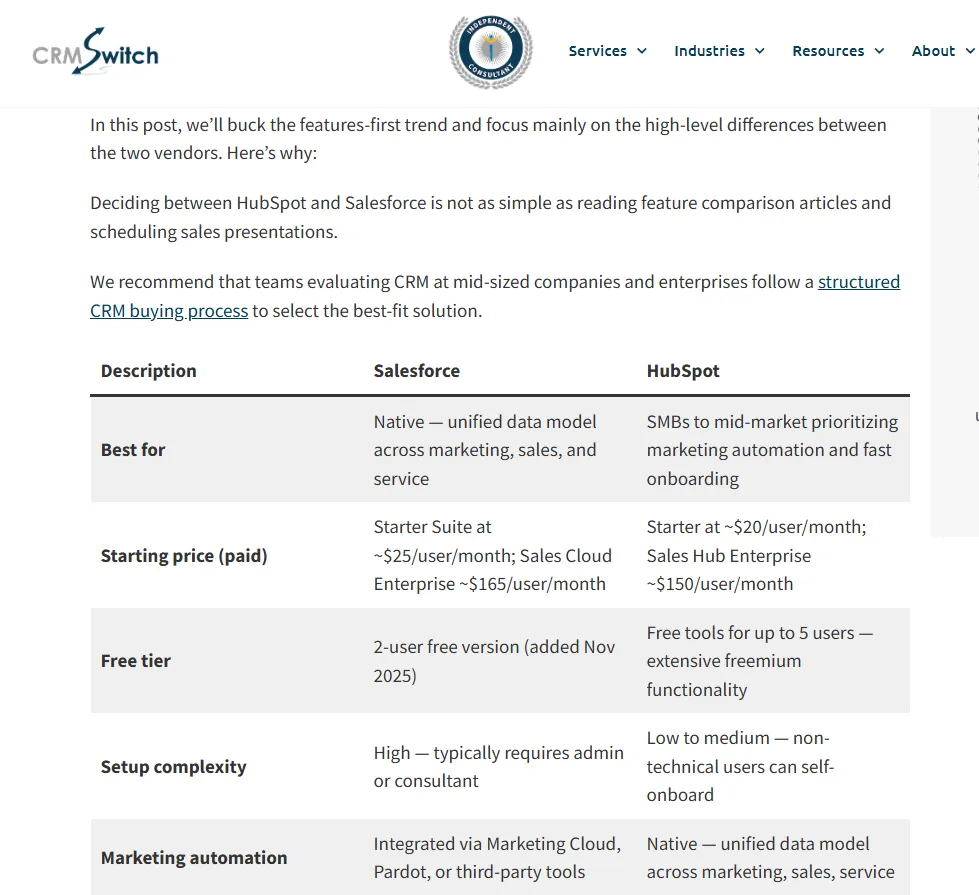
That’s what a page built for AEO looks like from the outside. The structure isn’t accidental — it’s designed to give an AI model exactly what it needs to pull a citable answer.
Where to Start
If your comparison content library is thin, begin with the direct two-way pages for your three to five biggest competitors. Get those optimized for AEO using the structure above. (If you’re scoping this internally, our AEO and GEO pricing guide breaks down what this kind of program typically costs.)
From there, build the three-way combinations. Use a combination spreadsheet to map your full competitor set, prioritize the pairings with the highest search volume in your category, and work through them systematically.
Then, layer in vertical-specific versions for the industries you serve most, and consider which competitor matchups you could credibly cover without your brand in the title.
That’s a comparison content strategy that works in both traditional search and AI search, and one that gives brands of any size a real path to showing up in the decisions that matter.
If you’d rather have a team build the roadmap and write the pages for you, that’s exactly what our content strategy and SEO content production services are designed to do.
Frequently Asked Questions
Do comparison pages built for AEO still rank in Google?
Yes, and that’s one of the reasons this content format is worth prioritizing. A well-structured comparison page that answers buyer questions clearly tends to perform in both environments. The elements that make a page useful to an AI model — direct answers, organized structure, specific detail — also make it a strong candidate for featured snippets and high organic rankings. You’re not optimizing for one channel at the expense of the other.
How long should a comparison page be?
Long enough to actually cover the topic, short enough to stay useful. That typically lands somewhere between 1,500 and 2,500 words for a standard two-way comparison, though vertical-specific or three-way pages often run longer because there’s more ground to cover. Word count isn’t the goal. Completeness is. If a buyer can read your page and walk away with enough information to make a real decision, the length is probably right.
What if my product doesn’t win in every category?
Write it honestly anyway. Buyers can tell when a comparison page is rigged in one brand’s favor, and AI models are getting better at identifying content that reads as promotional rather than informational. If a competitor has a stronger feature in a certain area, say so and explain the tradeoff. A page that acknowledges weaknesses while making a clear case for where your product wins is far more credible than one that pretends the competition doesn’t have strengths.
How many comparison pages should I build?
More than you think, less than you might fear. Start with your five closest competitors and create a direct two-way page for each. Then map out your three-way combinations using a spreadsheet generator so you’re not doing the math by hand. For a brand competing against eight or ten players, that combination set alone can produce a substantial content roadmap. Add vertical-specific pages as you identify industries where buyers are asking category-specific questions. You don’t have to build everything at once.
How do I know if AI tools are citing my comparison pages?
There’s no single dashboard that tracks this cleanly yet, but you can do spot checks manually. Run the queries you’re targeting in ChatGPT, Perplexity, and Gemini and see what gets surfaced. If your page isn’t showing up for a query it should own, check whether the content gives the AI a clear, extractable answer. Often the issue isn’t the topic — it’s that the page buries the answer or structures the information in a way that’s hard to parse. Fix the structure before assuming the page needs more content.
Should smaller brands bother with comparison pages if they’re going up against category leaders?
That’s exactly who should be building them. A category leader doesn’t need to write a three-way comparison page that includes a smaller competitor. The smaller brand does. Comparison content is one of the few formats where you can put your product in the same sentence as a much bigger name and have it feel completely natural. You’re not claiming to be the best. You’re claiming to be worth considering, in a context where the buyer is already looking at the alternatives. That’s a winnable position.
Content strategist at Digital Elevator, specializing in SEO-driven content for technology and healthcare brands.