The 11 Best Generative Engine Optimization (GEO) Agencies of 2026

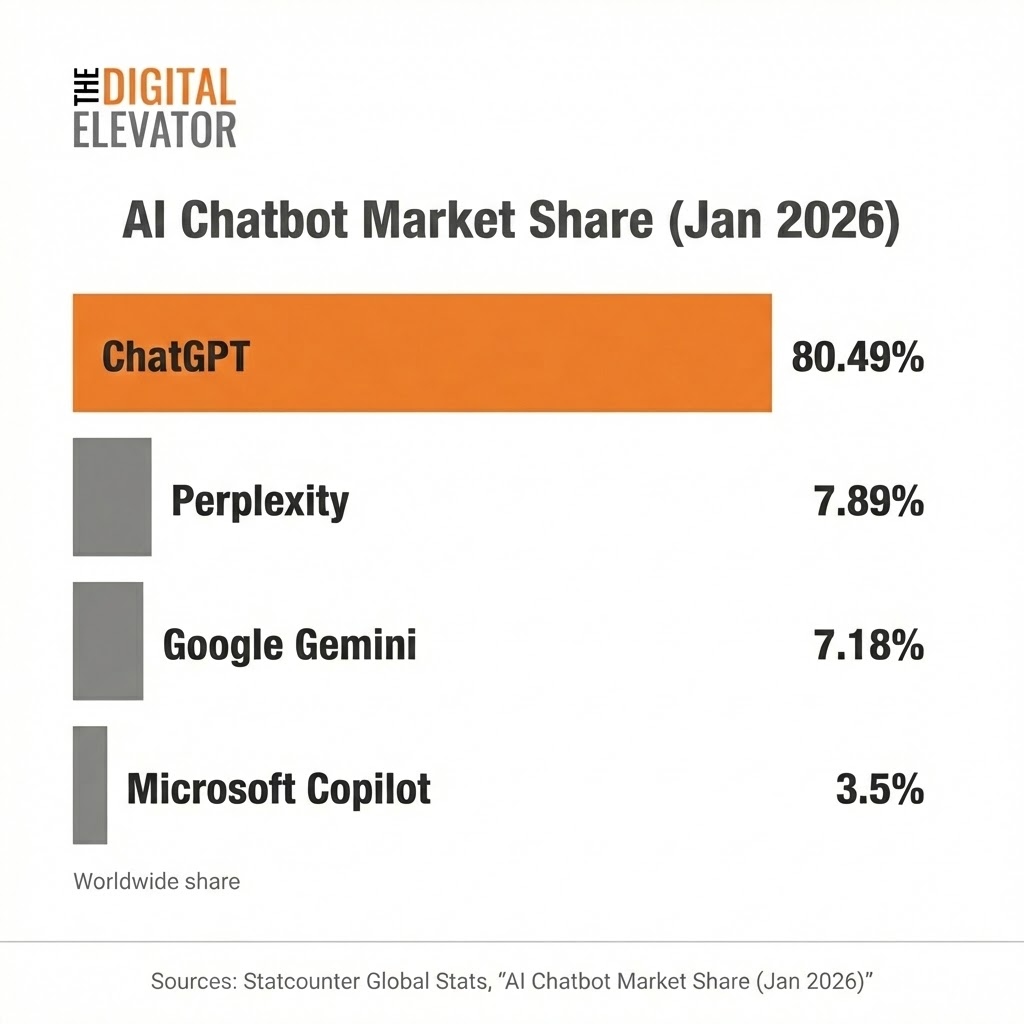
As generative AI platforms like Google AI Overviews, ChatGPT, and Perplexity become primary sources for information, brands that fail to optimize for this new landscape risk becoming invisible. While traditional SEO laid the groundwork, a new specialization has emerged: Generative Engine Optimization (GEO). This discipline focuses on ensuring a brand’s consistent and accurate representation within AI-generated answers, a critical factor for modern digital relevance.

True GEO goes beyond simple keyword optimization. It involves a multi-faceted approach that includes technical SEO for AI crawlers, strategic content architecture, authority building across trusted sources, and precise citation engineering. The agencies leading this charge have developed proprietary technologies and data-driven methodologies to navigate this complex and rapidly evolving ecosystem.

In this article, we’ll explore the top GEO agencies that are pioneering this new frontier, helping brands thrive in the age of AI by turning generative platforms into a reliable channel for customer acquisition.

Digital Elevator – Best for SMBs

Digital Elevator is a marketing agency that has embraced the power of AI to deliver exceptional results for clients across diverse industries. With nearly 15 years of experience, including Fortune 500 work, the agency focuses on high-growth, small to mid-market companies seeking to transform search visibility into measurable revenue. Their approach centers on creating high-intent content that meets buyers at the most critical stages of the sales funnel, ensuring that every piece of content serves a strategic purpose in the customer journey.

The agency’s expertise spans SEO, answer engine optimization (AEO), and content marketing, with a particular emphasis on bottom-funnel content that drives conversions. Digital Elevator provides a comprehensive suite of services including content strategy, competitive intelligence, SEO and AI optimization, content marketing, public relations, and UX/UI design. Their focus on revenue-generating content and AI brand discovery positions them as an ideal partner for businesses looking to make search a primary growth channel.

Specialization:

  • AI Search Optimization
  • LLM Optimization
  • Revenue-Focused Content Strategy
  • Bottom-Funnel Content Marketing
  • AI Competitive Intelligence

Ideal client:

  • Small businesses to mid-market enterprise seeking revenue growth through search

Client examples:

  • McKesson
  • Champions Oncology
  • Waters Corp
  • Harmonic
  • DuvaSawko

Graphite – Best for Full-Service GEO

Graphite is an AI-powered growth and SEO agency specializing in driving measurable visibility across both traditional and generative search. The agency focuses on the intersection of SEO, content strategy, and Answer Engine Optimization (AEO), helping brands gain presence not just on Google, but within emerging AI platforms like ChatGPT, Perplexity, and Gemini. Their philosophy centers on identifying the critical five percent of SEO work that drives all the impact, using AI to eliminate waste and maximize results.

Graphite works with high-growth SaaS and technology companies to build scalable, conversion-focused content systems that prioritize velocity and impact. Their proprietary methodologies and internal platform allow clients to track performance across search engines and generative models in one unified framework. With a full-stack AI-powered growth team covering editorial, programmatic, AEO, technical, and performance optimization, Graphite delivers reproducible results for some of the world’s most recognizable consumer tech brands.

Specialization:

  • Answer Engine Optimization (AEO)
  • Generative Engine Optimization (GEO)
  • Technical and Programmatic SEO
  • Scalable Content Systems
  • Growth Analytics and Forecasting

Ideal Client:

  • Mid-market to enterprise SaaS and technology companies

Client Examples:

  • MasterClass
  • BetterUp
  • Honey
  • Calm
  • Robinhood

Notebook Agency – Best for B2C SaaS

Notebook Agency is a results-driven SEO and LLM optimization agency that helps businesses attract qualified traffic and maximize growth with AI-powered strategies. They are focused on positioning brands as the preferred solution when buyers consult LLMs like Google AI Mode and ChatGPT. Their proprietary Trust Alignment Framework™ is designed to make your brand AI’s recommendation, not just another option, by building the trust signals that AI systems prioritize when making recommendations.

The agency brings over 67 years of combined SEO and GEO experience across a team of strategists, engineers, computer scientists, and experts in computational linguistics. They have driven over $200 million in revenue for clients and secured top rankings for high-value, high-volume keywords. Notebook Agency leverages an arsenal of over 300 advanced strategies from seonotebook.com and ainotebook.com, mixing and matching these approaches to create bespoke GEO and SEO campaigns that deliver long-term success.

Specialization:

  • AI Search Optimization
  • Trust Alignment Framework™
  • SEO-Driven Growth Consulting
  • Content Strategy & Creation
  • Link Building & Digital PR

Ideal client:

  • B2C SaaS companies seeking to dominate AI-powered search

Client examples:

  • Purple Mattress
  • Cirque du Soleil
  • Mejuri
  • FreshBooks

uSERP – Best for Enterprise Link Building

uSERP is an enterprise-focused SEO agency built around one core belief: organic growth only matters if it drives revenue. uSERP helps B2B, SaaS, and tech-enabled companies win competitive search markets by strengthening the signals that actually move rankings: authoritative links, content relevance, and sustained trust. Their work prioritizes commercial pages, conversion-value keyword positions, and long-term authority over vanity traffic with short-lived tactics.

Unlike traditional SEO vendors, uSERP operates as an extension of internal growth teams. Every campaign is led by senior SEOs and executed in-house, with a clear focus on outcomes: stronger rankings where ideal customers make buying decisions, increased visibility across search and AI-driven discovery, and lasting authority that enables better rankings across competitive verticals. This makes them particularly valuable for companies that need enterprise-grade link building as part of their broader GEO strategy.

Specialization:

  • Enterprise Grade Authority Link Building
  • Answer Engine Optimization (AEO)
  • Content Strategy and Production
  • Growth Forecasting and Strategic SEO Resource Allocation

Ideal Client:

  • Mid-market to enterprise tech-enabled companies

Client Examples:

  • Monday
  • OnBoard
  • HighTouch
  • Crowdstrike

Omnius – Best for European Markets

Omnius is a specialized SEO and LLMO agency with an exclusive focus on the B2B SaaS and Fintech industries, operating from their European base. With over a decade of experience in this space, they possess a deep understanding of the subscription-based business model and the unique needs of European companies navigating AI search optimization. What truly sets Omnius apart is AtomicAGI, their proprietary in-house AI SEO analytics software. This platform tracks brand visibility and citations across AI search platforms in real-time, a capability that positions them as a leader in GEO.

The agency has developed a comprehensive list of over 20 distinct GEO tactics, ranging from AI crawler optimization and LLMs.txt file creation to advanced citation engineering and synthetic query generation. This granular approach allows them to build highly tailored strategies that drive compound growth for clients on AI and LLM search engines like ChatGPT and Perplexity. Their European perspective and expertise make them particularly valuable for companies targeting European markets or seeking to expand their presence across the continent.

Specialization:

  • Generative Engine Optimization (GEO)
  • Revenue-Focused B2B SEO
  • Technical SEO for LLM Crawlers
  • Programmatic SEO for Scale
  • AI Visibility Tracking with AtomicAGI

Ideal client:

  • B2B SaaS and Fintech companies targeting European markets

Client examples:

  • TextCortex AI
  • Anna Money
  • Zencoder
  • AuthoredUp
  • Signify

Directive – Best for Enterprise B2B Brands

Directive positions itself as the top generative engine optimization agency for B2B brands ready to lead in the new era of search. With over a decade of experience, they have developed a sophisticated process designed to get their clients’ content and brand messaging inside ChatGPT, Gemini, and other LLMs. Their methodology is built on a foundation of AI-ready content architecture, building authority signals that AI models favor, and a unified strategy blending technical SEO, content intelligence, and digital PR.

Their services are tailored for the enterprise, focusing on how decision-makers use AI tools for research and procurement. Directive helps clients increase their visibility in zero-click and AI-summarized experiences, ensuring their site structure and content speak effectively to both human users and AI systems. This makes them a strong partner for large organizations looking to future-proof their digital presence.

Specialization:

  • AI-Ready Content Architecture
  • Authority Signals for AI Models
  • Generative Engine Optimization Strategy
  • Technical SEO & Digital PR
  • AI-Driven Engagement Reporting

Ideal client:

  • Mid-market to enterprise B2B brands

Client examples:

  • (Enterprise client list available upon request)

Animalz – Best for Content-Driven GEO

Animalz is a premier content marketing agency for B2B SaaS that has seamlessly woven Answer Engine Optimization (AEO) and GEO throughout its content strategies. They stand out by refusing to compromise on editorial quality while pursuing technical performance. Their process begins with a comprehensive AEO audit to map a client’s current AI visibility and benchmark it against competitors, resulting in a 90-day execution roadmap.

Their strength lies in creating authoritative content through deep interviews with subject matter experts, which is then structured and optimized to be cited by AI platforms. Animalz produces everything from AEO-optimized blog articles and ebooks to thought leadership content, ensuring that every asset is built to perform in both traditional search and AI-generated answers. They are the ideal choice for SaaS companies that want to build true authority and earn AI citations through high-quality, expert-driven content.

Specialization:

  • AEO/GEO Content Strategy
  • Expert-Driven Content Creation
  • AI Visibility Audits & Entity Mapping
  • On-Page SEO & Internal Linking
  • Thought Leadership for AI Platforms

Ideal client:

  • B2B SaaS companies focused on high-quality, authoritative content

Client examples:

  • Wistia
  • GoDaddy
  • Zendesk
  • Intercom
  • Retool

Siege Media – Best for Enterprise Content Marketing

Siege Media is a well-established content marketing agency that has skillfully adapted its approach for the generative era. They build integrated GEO, SEO, and content strategies designed to drive compounding growth for large B2B and B2C enterprise brands. Their focus is on ensuring that a brand’s content appears wherever people are searching, whether it’s a traditional Google query or a complex prompt in ChatGPT or Perplexity.

By focusing on creating high-quality, helpful content and promoting it effectively, Siege Media helps its clients achieve stronger visibility, attract more qualified traffic, and build long-term SEO resilience in a changing search landscape. Their experience with major enterprise clients demonstrates their ability to scale content operations and deliver results for some of the world’s most recognizable brands.

Specialization:

  • Generative Experience Optimization (GEO)
  • SEO & Content Strategy
  • Enterprise Content Creation
  • Content Promotion & Link Building
  • Digital PR

Ideal client:

  • Enterprise brands (B2B & B2C)

Client examples:

  • Instacart
  • Figma
  • Zoom
  • Asana
  • Tripadvisor

Intero Digital – Best for Large Content Libraries

With a history dating back to 1996, Intero Digital brings nearly three decades of digital marketing experience to the GEO landscape. Their approach is distinctly technical, centered around their proprietary crawler simulation, InteroBOT®. This tool mimics how both generative engines and traditional crawlers evaluate content, allowing them to surface technical issues that limit a brand’s discoverability in AI platforms.

This technical focus makes Intero Digital particularly effective for enterprise clients with vast and complex content libraries. By optimizing the underlying website structure and ensuring content is fully accessible to AI systems, they help large brands unlock the full value of their existing content assets and improve their visibility on platforms like ChatGPT and Perplexity.

Specialization:

  • Technical Optimization for GEO
  • InteroBOT® Crawler Simulation
  • Full-Funnel Marketing Services
  • Website Development
  • Content Marketing

Ideal client:

  • Enterprise clients with large and complex content libraries

Client examples:

  • Tamron
  • Quantum Health
  • Arizona Technology Council
  • Zayo

iPullRank – Best for Complex Websites

iPullRank is an enterprise-level technical SEO agency that has established itself as a thought leader in the GEO space, notably through its comprehensive “AI Search Manual.” With a track record of delivering over $4 billion in organic search results, their expertise is rooted in deep technical disciplines like JavaScript rendering, log file analysis, and large-scale site architecture. This foundation is critical for ensuring that complex enterprise websites can be effectively crawled and interpreted by generative platforms.

Their process treats generative optimization as a core part of the workflow, not an add-on. Audits include a detailed analysis of how AI systems access and evaluate a client’s content strategy. For enterprises with intricate websites and a need for sophisticated technical solutions, iPullRank offers a level of expertise that few can match.

Specialization:

  • Enterprise-Level Technical SEO
  • Generative AI Adoption & Strategy
  • JavaScript Rendering & Log File Analysis
  • Large-Scale Site Architecture
  • Relevance Engineering

Ideal client:

  • Enterprise websites with complex technical structures

Client examples:

  • American Express
  • Citi
  • (Other enterprise clients)

Go Fish Digital – Best for Data-Driven GEO

Go Fish Digital stands out as one of the most advanced agencies in the GEO space, with a team recognized for its unique ability to analyze and apply Google patents directly to client strategies. They employ custom-built technology with backtested results to pinpoint exactly where and how a brand can increase its inclusion in AI-generated answers. This data-science approach provides a significant competitive edge.

Their methodology is deeply rooted in understanding the mechanics of how AI systems retrieve, prioritize, and present information. By reverse-engineering these systems, they build highly tactical and measurable plans to influence them. For high-profile brands seeking a deeply analytical and evidence-based approach to GEO, Go Fish Digital offers a compelling and sophisticated solution.

Specialization:

  • Patent-Based GEO Strategies
  • Custom-Built AI SEO Technology
  • Semantic Content Audits
  • AI Overview Analysis
  • Data-Driven Content Prioritization

Ideal client:

  • High-profile brands seeking a data-science approach to GEO

Client examples:

  • GEICO
  • About Amazon
  • Wayfair
  • Jelly Belly

Guide to Working with a GEO Agency

Choosing the right Generative Engine Optimization agency is crucial for navigating the evolving search landscape. Here are some key considerations to help you make an informed decision:

  • Proven GEO Expertise: Look for agencies with a track record of success in getting clients cited in AI Overviews and other generative search platforms. Ask for specific case studies and data to back up their claims.
  • Technical Capabilities: A top GEO agency should have a deep understanding of large language models (LLMs), semantic search, retrieval-augmented generation (RAG), and the technical aspects of optimizing for AI. They should be able to explain their methodologies clearly.
  • Custom Technology: Inquire about any proprietary tools or platforms they use for GEO, such as AI visibility trackers or crawler simulators. Custom technology can be a sign of a forward-thinking agency that is invested in staying ahead of the curve.
  • Strategic Approach: The agency should have a strategic, data-driven approach to GEO that aligns with your business goals. They should be able to create a customized strategy tailored to your specific needs and target audience, focusing on pipeline and revenue, not just visibility.
  • Thought Leadership: Look for an agency that is actively contributing to the conversation around GEO. This can be a sign that they are passionate about what they do and are committed to staying up-to-date on the latest trends and best practices.

If you’re a small-to-medium enterprise and are looking for a GEO partner, contact Digital Elevator today.

The 10 Best AI SEO Agencies in 2026

AI-powered platforms like Google AI Overviews, ChatGPT, and Perplexity are increasingly becoming the go-to sources for answers, and brands that fail to adapt risk becoming invisible.

While traditional SEO has been correlated with mentions in these tools, the following agencies have shown a particular knack for capitalizing on the emerging factors related to AI SEO. While this is our list, we are particularly keen on the leaders in the AI SEO space, the brands with legit case studies and credibility, or those that are on the thought leadership front that own or work at these agencies.

In this article, we’ll explore the top agencies that are pioneering this new frontier and helping brands like yours thrive in the age of AI.

Digital Elevator – Best for SMBs

Digital Elevator is a marketing agency known for its work in biotech, healthcare, and eCommerce that has embraced the power of AI to deliver exceptional results for its clients. Their focus on SEO, answer engine optimization (AEO), and content marketing helps clients increase their visibility in both traditional and generative search. 

With nearly 15 years of experience, including Fortune 500 work, the agency focuses on high-growth, small to mid-market companies, providing content strategy, competitive intelligence, SEO and AI optimization, bottom-funnel content marketing, PR, and UX/UI design. Digital Elevator’s specific focus is creating high-intent content that meet buyers at the most critical stages of the sales funnel, including the most critical sources of content that drive AI brand discovery.

Specialization:

  • AI Search Optimization
  • LLM Optimization
  • SEO-Driven Growth Consulting
  • Content Strategy & Creation
  • AI Competitive Intelligence

Ideal client:

  • Small businesses to mid-market enterprise

Client examples:

  • McKesson
  • Champions Oncology
  • Waters Corp
  • Harmonic
  • DuvaSawko

Graphite– Best for AI-Driven SEO

Graphite is an AI-powered growth and SEO agency specializing in driving measurable visibility
across both traditional and generative search. The agency focuses on the intersection of SEO,
content strategy, and Answer Engine Optimization (AEO)—helping brands gain presence not
just on Google, but within emerging AI platforms like ChatGPT, Perplexity, and Gemini.

Graphite works with high-growth SaaS and technology companies to build scalable, conversion-
focused content systems that prioritize velocity and impact. Their proprietary methodologies and
internal platform allow clients to track performance across search engines and generative
models in one unified framework.

Specialization:

  • Answer Engine Optimization (AEO)
  • Generative Engine Optimization (GEO)
  • Technical and Programmatic SEO
  • Scalable Content Systems
  • Growth Analytics and Forecasting

Ideal Client:

  • Mid-market to enterprise SaaS and technology companies

Client Examples:

  • MasterClass
  • BetterUp
  • Honey
  • Calm
  • Robinhood

Notebook Agency – Best for B2C SaaS

Notebook Agency is a results-driven SEO and LLM optimization agency that helps businesses attract qualified traffic and maximize growth with AI-powered strategies. They are focused on positioning brands as the preferred solution when enterprise buyers consult LLMs like Google AI Mode and ChatGPT. Their Truth Alignment Framework™ is designed to make your brand AI’s recommendation, not just another option.

Specialization:

  • AI Search Optimization
  • SEO-Driven Growth Consulting
  • Content Strategy & Creation
  • Technical SEO Optimization
  • Link Building & Digital PR

Ideal client:

  • B2B SaaS companies

Client examples:

  • Signaturely
  • Bonsai
  • CryptoWallet

Omnius – Best for B2B SaaS & Fintech

Omnius is a specialized SEO & LLMO agency known for its exclusive work with B2B SaaS and Fintech companies that have embraced the power of AI search optimization to deliver exceptional revenue-focused results. Their focus on SEO, GEO (Generative Engine Optimization), and bottom-of-funnel content marketing helps clients increase their visibility in both traditional search engines and AI platforms such as ChatGPT and Perplexity.

With over a decade of experience working exclusively in the SaaS and Fintech space, the agency focuses on subscription-based businesses, from venture-backed startups to enterprise companies. What sets them apart is AtomicAGI, their proprietary in-house AI SEO analytics software that tracks brand visibility and citations across AI search platforms in real-time, a capability most agencies lack, positioning Omnius as an industry leader in GEO.

Specialization:

  • Generative Engine Optimization (GEO)
  • Revenue-Focused B2B SEO (On-Page & Off-Page)
  • Technical SEO for LLM Crawlers
  • Programmatic SEO for Scale
  • Content Marketing

Ideal client:

  • B2B SaaS companies (early-stage to enterprise)
  • Fintech platforms
  • AI/LLM software companies

Client examples:

  • TextCortex AI
  • Anna Money
  • Zencoder

Siege Media – Best for Enterprise Content

Siege Media is a content marketing agency that has adapted its approach for the generative era. They build GEO, SEO, and content strategies that drive compounding growth for B2B and B2C enterprise brands. Their strategies ensure that content shows up where people are searching, whether it’s Google, ChatGPT, Perplexity, or other LLMs. This means stronger visibility, more qualified traffic, and long-term SEO resilience.

Specialization:

  • Generative Experience Optimization (GEO)
  • SEO & Content Strategy
  • Content Creation & Promotion
  • Link Building & Digital PR

Ideal client:

  • Enterprise brands (B2B & B2C)

Client examples:

  • Instacart
  • Figma
  • Zoom

Grow and Convert– Best for ROI-focused Content

Grow and Convert is a content marketing and SEO agency that has expanded into AI search optimization with a research-backed approach. They developed the Prioritized GEO framework, which prioritizes owned content and acquiring brand mentions as the foundation of an AI content strategy. The agency is known for their Pain Point SEO framework, which targets bottom-of-funnel keywords where buyers are actively searching for solutions.

Specialization:

  • Bottom-of-Funnel Content Strategy
  • Pain Point SEO
  • Generative Engine Optimization (GEO)
  • AI Visibility Tracking
  • Content Marketing

Ideal client:

  • B2B SaaS and software companies focused on lead generation and conversions

Client examples:

  • ToroTMS
  • Constitution Lending
  • Innovationcast

uSERP– Best for Enterprise Link Building

uSERP is an enterprise-focused SEO agency built around one core belief: organic growth only matters if it drives revenue. uSERP helps B2B, SaaS, and tech-enabled companies win competitive search markets by strengthening the signals that actually move rankings: authoritative links, content relevance, and sustained trust. Their work prioritizes commercial pages, conversion-value keyword positions, and long-term authority over vanity traffic with short-lived tactics.

Unlike traditional SEO vendors, uSERP operates as an extension of internal growth teams. Every campaign is led by senior SEOs and executed in-house, with a clear focus on outcomes: stronger rankings where ideal customers make buying decisions, increased visibility across search and AI-driven discovery, and lasting authority that enables better rankings across competitive verticals.

Specialization:

  • Enterprise Grade Authority Link Building
  • Answer Engine Optimization (AEO)
  • Content Strategy and Production
  • Growth Forecasting and Strategic SEO Resource Allocation 

Ideal Client:

  • Mid-market to enterprise tech-enabled companies

Client Examples:

  • Monday
  • OnBoard
  • HighTouch
  • Crowdstrike

Intero Digital – Best for Large Content Libraries

Intero Digital takes a technical approach to GEO, providing clients with website optimizations that increase their page visibility in generative engines. Their proprietary crawler simulation, InteroBOT®, mimics how generative engines and traditional crawlers evaluate content, helping to surface issues that limit discoverability. This approach is particularly effective for brands with large content libraries that want to improve visibility on platforms like ChatGPT and Perplexity.

Specialization:

  • Technical Optimization for GEO
  • Full-Funnel Marketing Services
  • Website Development
  • Content Marketing

Ideal client:

  • Enterprise clients with large content libraries

Client examples:

  • Tamron
  • Quantum Health
  • Arizona Technology Council
  • Zayo

iPullRank – Best for Complex Websites

iPullRank focuses on enterprise-level technical SEO, with deep experience in JavaScript rendering, log file analysis, and large-scale site architecture. Their process is built to ensure that both search engines and generative platforms can crawl and interpret complex content structures without friction. Generative optimization is part of their core workflow, with audits that include analysis of how AI systems access and evaluate content strategy.

Specialization:

  • Enterprise-Level Technical SEO
  • Generative AI Adoption
  • JavaScript Rendering & Log File Analysis
  • Large-Scale Site Architecture

Ideal client:

  • Enterprise websites with complex content structures

Client examples:

  • American Express
  • Citi

Go Fish Digital – Best for Data-driven Marketing

Go Fish Digital is one of the most advanced agencies in the GEO space, with a team recognized for its unmatched ability to analyze and apply Google patents directly to client strategies. They use custom-built technology with backtested results to identify exactly where and how a brand can increase its inclusion in AI-generated answers. Their approach is deeply rooted in understanding how AI systems retrieve and prioritize content, and then building tactical plans to influence those systems in measurable ways.

Specialization:

  • Patent-Based GEO Strategies
  • Custom-Built AI SEO Technology
  • Semantic Content Audits
  • AI Overview Analysis

Ideal client:

  • High-profile brands seeking a data-science approach to GEO

Client examples:

  • GEICO
  • About Amazon
  • Wayfair
  • Jelly Belly

Guide to Working with an AI SEO Agency

Choosing the right AI SEO agency is crucial for navigating the evolving search landscape. Here are some key considerations to help you make an informed decision:

  • Proven AI SEO Expertise: Look for agencies with a track record of success in ranking clients in AI Overviews and other generative search platforms. Ask for case studies and data to back up their claims.
  • Technical Capabilities: A top AI SEO agency should have a deep understanding of large language models (LLMs), semantic search, and the technical aspects of optimizing for AI. They should be able to explain their methodologies in a clear and concise way.
  • Custom Technology: Inquire about any proprietary tools or platforms they use for AI SEO. Custom technology can be a sign of a forward-thinking agency that is invested in staying ahead of the curve.
  • Strategic Approach: The agency should have a strategic, data-driven approach to AI SEO that aligns with your business goals. They should be able to create a customized strategy that is tailored to your specific needs and target audience.
  • Thought Leadership: Look for an agency that is actively contributing to the conversation around AI SEO. This can be a sign that they are passionate about what they do and are committed to staying up-to-date on the latest trends and best practices.

If you’re an small-to-medium enterprise and are looking for an AI SEO partner, contact Digital Elevator today.

Answer Engine Optimization (AEO): A Strategic Framework for Winning in AI Search in 2026

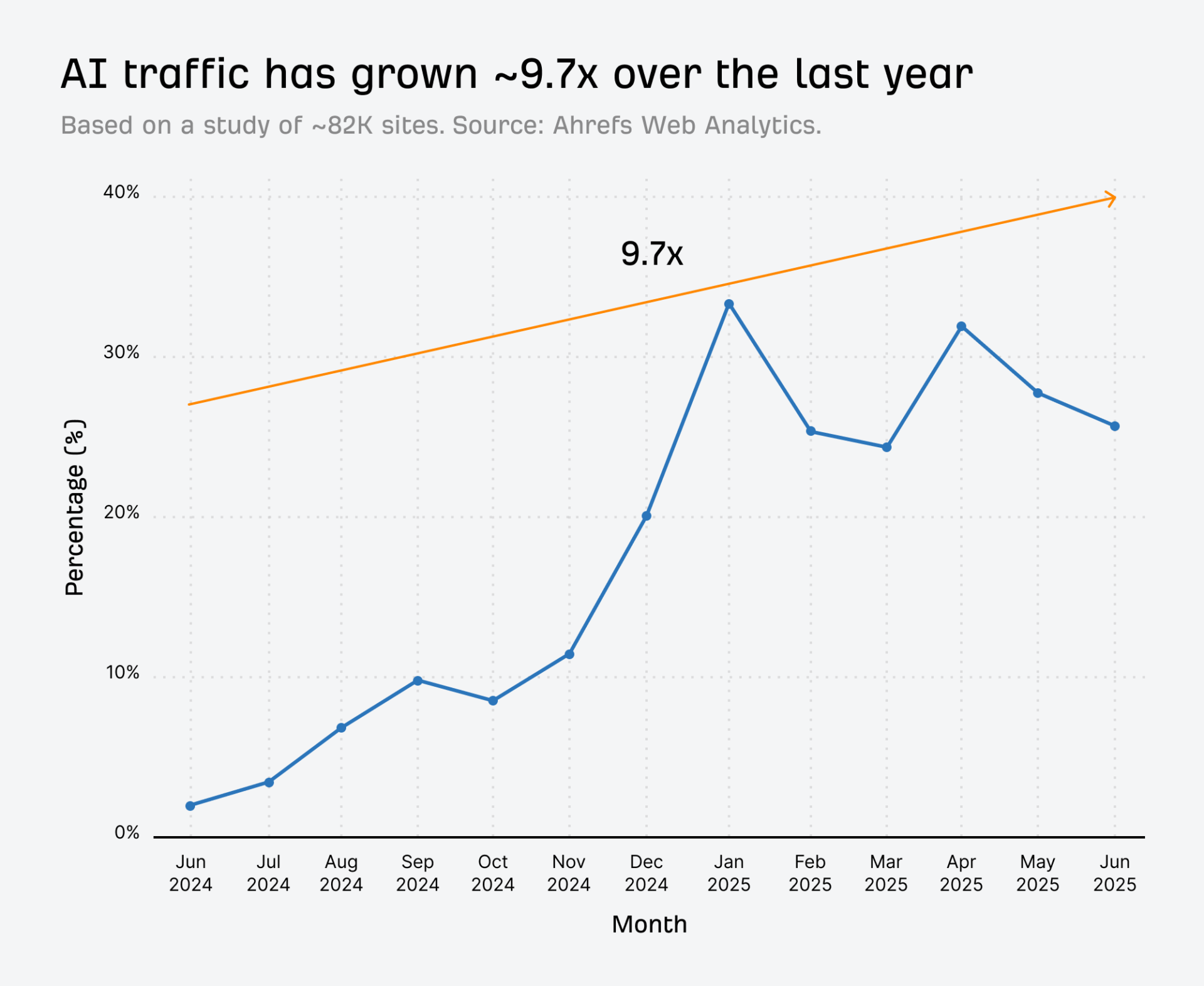
The bottom line: While AI-driven traffic currently represents less than 1% of overall website traffic, its quality and conversion potential are unprecedented. SEO software leader Ahrefs reports that despite accounting for less than 1% of their total traffic, visitors from AI platforms are their highest converting channel—with a conversion rate exceeding 10%. This document outlines a strategic framework to capitalize on this shift, moving beyond volume metrics to capture highly qualified, high-intent users at the final stages of their decision-making process.

Every marketing team I speak to has heard of Answer Engine Optimization (AEO), but most have no idea how to approach it strategically. They’re stuck in the same mindset that got them ranking in Google—and that’s a problem.

As Klaus-M. Schremser, co-founder of Otterly.AI, puts it:

“Today’s AI-search engines are answering machines rather than search engines. We have to take that into account in our optimization strategies for LLMs and GenAI.”

I wanted to develop this AEO strategy document to give marketing teams a clear, repeatable process for optimizing their brand’s presence within AI answer engines—not just for visibility, but for active recommendation and high-intent traffic.

Why AEO Matters: The ROI Question

Let’s face it. You have limited marketing budget and a lot of channels competing for it. So why should AEO be a priority?

The TLDR version: AI traffic converts at rates that blow traditional channels out of the water.

While the volume is still small, the quality is unmatched. Here’s what we’re seeing:

  • Ahrefs reports AI traffic as their highest converting channel, despite being less than 1% of total traffic, with conversion rates exceeding 10%.
  • Users who click through from AI are more informed, have done their research, and are ready to make decisions.
  • Early movers have a significant advantage—over 40% of AI professionals are exploring ways to optimize generative AI outputs, but most don’t have a strategy yet.

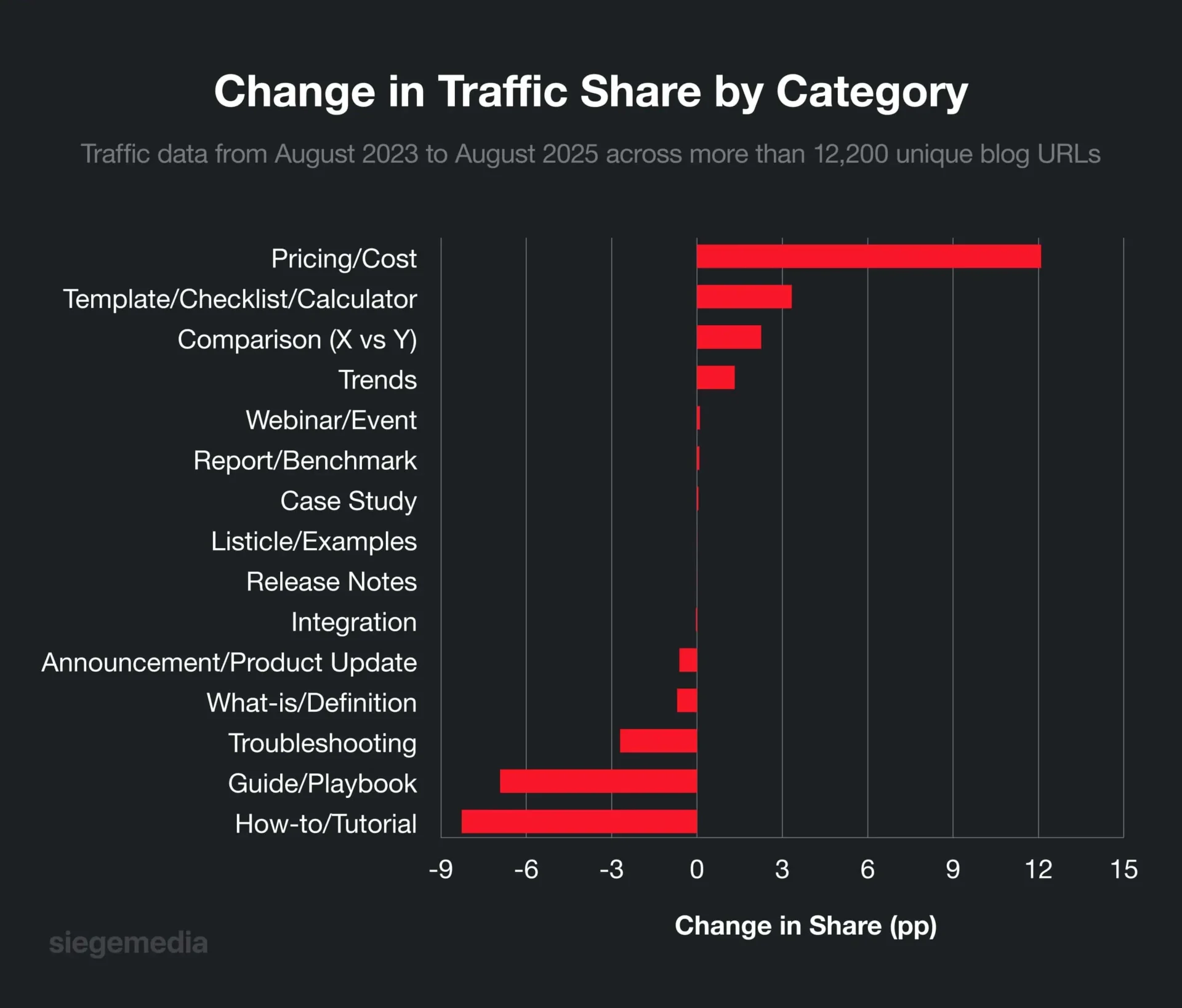
The shift is already happening. A study by Siege Media found that as AI answers more general questions, traffic to traditional “guide” and “how-to” content has plummeted by -34.7% and -88.3% respectively. AI is eating the top of the funnel. What’s left? High-intent, bottom-of-funnel traffic that’s ready to convert.

Understanding the Landscape: Mentions vs. Citations

Before we dive into strategy, it’s critical to understand the two primary forms of AI visibility—because they represent fundamentally different outcomes and require distinct optimization approaches.

Getting mentioned in LLMs

Mentions occur when a brand, product, or service is named in an AI-generated response without a direct, clickable link. This is a measure of brand recognition and recommendation by the AI itself.

Getting cited in LLMs

Citations, by contrast, are direct, clickable links to a webpage that the AI used as a source for its answer. Citations represent the new currency for driving high-intent traffic from AI.

Here’s the thing: mentions matter more than citations.

Research from BrightEdge shows that ChatGPT mentions brands 3.2 times more often than it cites them. From a user behavior perspective, users are guaranteed to read the AI’s direct answer (where mentions occur) but may not look at or click on the citations, which are often hidden or less prominent. Furthermore, mentions are more stable and less volatile than citations, providing a more consistent signal of brand trust and authority within the AI model.

What Drives Mentions and Citations?

Commercial queries are the primary drivers of both. The same BrightEdge study found that queries with commercial intent—using words like “best,” “deals,” “vs,” “alternatives”—drive 4-8 times more mentions than purely informational queries.

This insight is critical for content strategy. It reinforces the importance of bottom-of-funnel (BOFU) content in the AEO landscape—the same content types we’ve been pushing for years in our SEO-driven content marketing approach.

The 3-Pillar AEO Framework: Our Repeatable Process

At Digital Elevator, we’ve developed a proprietary, outcome-oriented 3-step process for building a defensible AEO strategy. The framework is built around the three fundamental ways that AI models determine brand visibility: through owned content, earned validation, and amplified authority signals.

We call it the 3 P’s: Presence, Prominence, and Propagation.

Pillar 1: Presence (Owned Media Strategy)

Goal: Establish your website as the definitive, authoritative source of truth for your products, services, and market category—directly influencing the information LLMs use.

Why Owned Content Matters

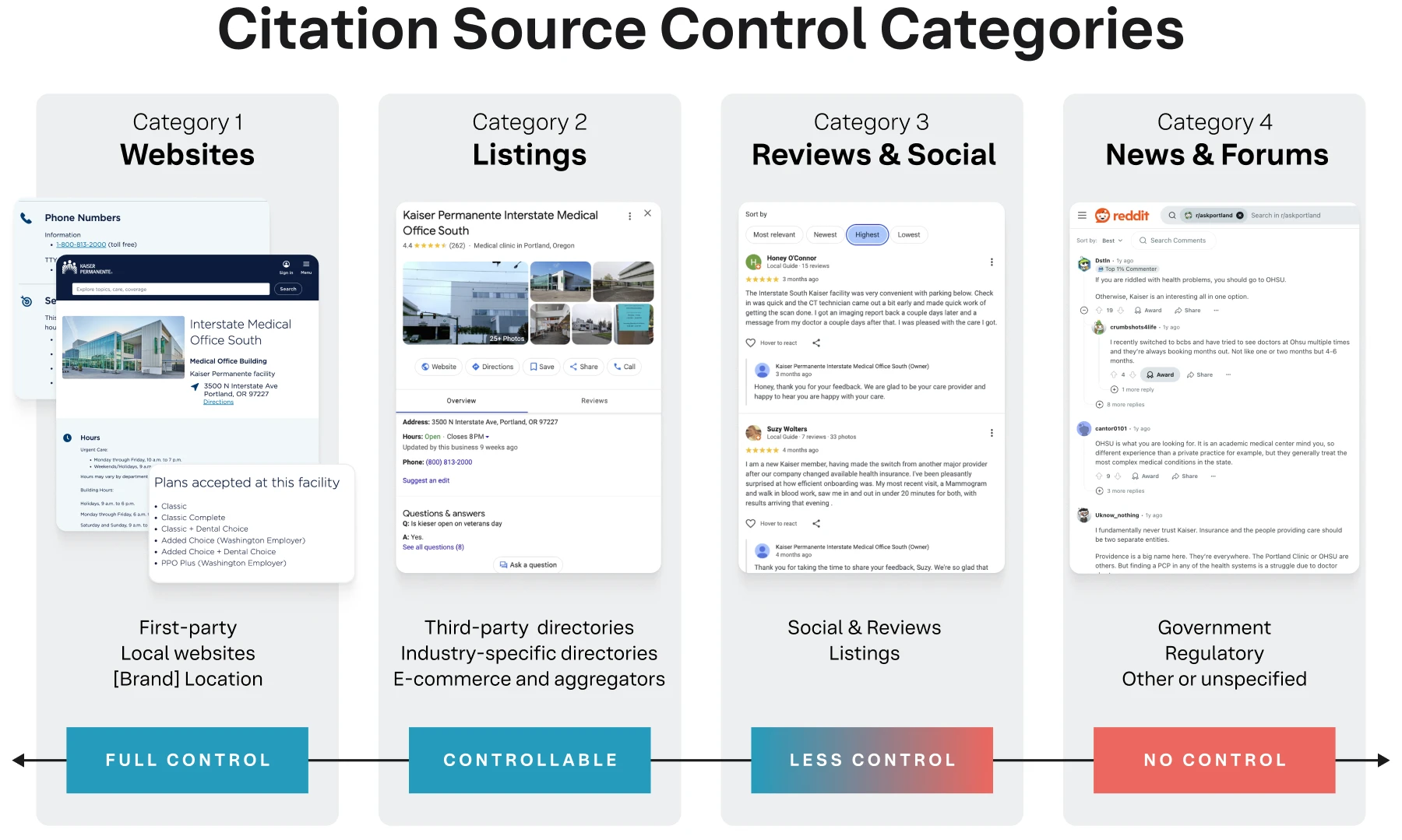
For factual, objective questions, AI models show a strong preference for first-party content. A Yext study of 6.8 million citations found that brand websites were the dominant source (over 40%) for all major AI models when answering objective, unbranded queries.

But here’s where it gets interesting: traditional SEO fundamentals still matter for AEO.

A recent study by Seer Interactive demonstrated a strong correlation (0.65) between organic search ranking and LLM mentions. This means that traditional SEO factors—particularly organic visibility—directly influence AI visibility. Backlinks, however, were found to be relatively neutral and not as relevant.

The Bottom-of-Funnel (BOFU) Shift

AI is accelerating a market shift away from broad, top-of-funnel content. The Siege Media study I mentioned earlier found that as AI answers more general questions, traffic to traditional “guide” and “how-to” content has plummeted. Users who click through are now more informed and have specific, high-intent, BOFU questions.

This is exactly the type of content we’ve been creating for our clients for years—”best,” “vs,” “pricing,” “alternatives” content mixed with strong UI and clear calls-to-action.

Actionable Steps for Pillar 1:

1. Build Your Brand Authority Repository

Create a centralized, internally-validated repository of all critical information about your brand. This serves as the single source of truth that informs all content creation and ensures consistency across platforms.

This repository must include:

  • Detailed product/service capabilities and key differentiators
  • Crucially, a focus on BOFU content: Pricing, detailed comparisons (“vs”), alternatives, integrations, compliance, and support details
  • Ideal Customer Profile (ICP) fit and specific, niche use cases
  • Proprietary data, case studies, and unique insights that cannot be replicated by AI summaries

2. Execute a BOFU-Centric Content Strategy

Based on the principles from the Graphite guide and the OtterlyAI research, create dedicated pages or enhance existing ones to target clusters of high-intent questions. Here are six key optimization principles for owned content:

  • Deliver Meaningful Value, Not Fluff: Prioritize expertise and specificity. Add unique insights, original research, or frameworks. Support content with data and credible sources.
  • Answer Search Intent Quickly and Clearly: Use summary boxes or TL;DR sections. Provide direct answers to common questions. Avoid burying key insights below the fold.
  • Structure Content for Semantic Parsing: Use clear headings (H2/H3) to delineate sections. Follow logical, hierarchical content flow. Include lists, tables, and callouts to break up text.
  • Align Content to Natural Language Queries: Use headings that match user questions (e.g., “What is [Product] pricing?”). Embed concise, relevant answers right below. Avoid keyword stuffing—focus on relevance and clarity.
  • Increase Originality and Authority: Cite your own data or case studies. Include expert commentary or author bios. Build domain authority with internal linking and topical consistency.
  • Optimize Existing Content at Scale: Refresh outdated information. Add missing sections that answer emerging queries. Consolidate thin pages into robust, evergreen resources.

Prioritize “Product Questions”—queries that are likely to result in a product recommendation. Structure content to directly answer these questions in a clear, concise, and easily parsable format for LLMs. Go beyond simple summaries and provide expert-level detail, proprietary data, and unique workflows that an AI cannot replicate.

3. Implement Foundational Technical Best Practices

While extensive technical AEO is not recommended, ensure content is easily crawlable, structured, and semantically rich. Use schema markup where appropriate to clearly define entities and relationships. Maintain strong traditional SEO fundamentals, as organic ranking directly correlates with LLM mentions.

4. Leverage E-E-A-T Signals

AI systems like ChatGPT and Google’s Search Generative Experience (SGE) rely on citations and authority signals to curate trustworthy results. Google has made clear that Experience, Expertise, Authoritativeness, and Trust (E-E-A-T) continue to influence content ranking—now also in the generative layer.

Content that is well-linked internally and externally, features clear authorship and expertise, and provides up-to-date, comprehensive answers is far more likely to be quoted or recommended by AI systems.

Pillar 2: Prominence (Earned Media Strategy)

Goal: Ensure your brand is prominently featured and validated by the third-party sources that AI models trust for subjective and opinion-based queries.

Why Third-Party Validation Matters

When queries become subjective (e.g., “What is the best…?”), AI models shift their reliance to third-party directories and industry-specific sources to gauge consensus and authority.

Understanding where LLMs get their training data helps inform where to focus earned media efforts. Large language models are trained on vast datasets that include Common Crawl (60%), WebText2 (22%), Books (16%), and Wikipedia (3%). Additionally, OpenAI has partnerships with news sites and has licensed Reddit’s user-generated content for LLM training.

Actionable Steps for Pillar 2:

1. Master General Directories

For subjective queries on OpenAI’s ChatGPT, third-party directories are a primary source, peaking at 46.3% for branded subjective questions. Ensure profiles on major platforms are complete, accurate, and consistent with your brand’s authority repository. This includes maintaining up-to-date information on pricing, features, integrations, and customer reviews.

2. Dominate Industry-Specific Platforms

For models like Perplexity, industry-specific directories are key. These niche platforms account for 24% of citations for unbranded subjective queries. Identify and optimize presence on the most authoritative review sites and platforms in your vertical. Actively manage reviews and engage with user feedback to signal ongoing authority and responsiveness.

3. Execute Citation Optimization

Identify the most frequently cited URLs for your target AEO topics and develop a strategy to get your brand mentioned within that content. This is the core of an “earned” AEO strategy.

Use tools that analyze citation sources (based on Perplexity’s “Sources” tab, Google’s SGE snippets, or ChatGPT’s browsing references) to reverse-engineer visibility. This approach allows you to:

  • Identify content currently cited in AI results
  • Spot thematic or structural patterns across cited pages
  • Compare converting vs. non-converting content from AI-driven traffic
  • Map gaps and opportunities for content creation and optimization

4. Secure Wikipedia Presence

Wikipedia is not only a 5x boosted source in LLM training data, but it is also frequently cited by AI models for factual information. For brands that meet Wikipedia’s notability guidelines, establishing and maintaining a well-sourced Wikipedia page is a high-value earned media tactic.

Pillar 3: Propagation (Off-Page Amplification)

Goal: Amplify the signals of trust and authority around owned and earned assets, creating a feedback loop that reinforces your brand’s position within the AI ecosystem.

While direct content is crucial, AI models also weigh broader signals of authority and public discourse. This pillar focuses on influencing the wider web to reinforce the narratives established in Pillars 1 and 2.

Actionable Steps for Pillar 3:

1. Strategic Public Relations

Target PR efforts to secure mentions and links from high-authority news outlets and publications that are frequently cited by AI models. Given that OpenAI has partnerships with news sites and that news content is part of LLM training data, securing coverage in these outlets has a dual benefit: immediate visibility and long-term influence on model training.

2. Community Marketing and Social Validation

Foster conversations and user-generated content on social platforms that validate your brand’s key differentiators and market position. While forums like Reddit account for a small percentage of citations in location-based queries (~2%), they are still valuable for brand commentary and narrative shaping.

Importantly, Reddit’s user-generated content has been licensed for LLM training, making authentic community engagement a long-term investment in AI visibility. Encourage forum participation and thought leadership in relevant online communities. The goal is not just immediate visibility, but to influence the broader corpus of content that AI models learn from.

3. Targeted Advertising

Use paid channels to amplify your best-performing BOFU content, driving user engagement and signaling to AI models that this content is valuable and relevant. While advertising does not directly influence LLM training, it can drive traffic and engagement signals that indirectly boost content authority and visibility.

Next Steps: How to Get Started with AEO

The transition to an AEO-centric world is inevitable, and early movers have a significant advantage. Research shows that over 40% of AI professionals are currently exploring ways to optimize generative AI outputs, but most don’t have a strategy yet.

The strategic imperative is to act now to build a defensible position before the space becomes saturated.

Here’s how to get started:

1. Audit Your Current AEO Footprint

Begin by identifying the most important “Product Questions” and commercial-intent queries for your brand. Use tools that analyze citation sources to understand where your brand currently appears (or doesn’t) in AI-generated responses.

2. Initiate the Brand Authority Repository

Assemble the cross-functional team required to build and validate this central repository of information. This should include product, marketing, sales, and customer success teams to ensure comprehensive and accurate information.

3. Prioritize BOFU Content Creation

Analyze existing content for gaps and create a roadmap for developing the high-intent, comparison, and detail-oriented content that succeeds in the AEO landscape. Focus on content that provides a level of detail and expertise that a general AI summary cannot replicate.

4. Strengthen SEO Fundamentals

Given the strong correlation between organic ranking and LLM mentions, ensure that traditional SEO best practices are in place. This includes technical SEO, on-page optimization, and building domain authority through internal linking and topical consistency.

5. Reverse-Engineer Competitor Visibility

Analyze which competitors are being cited or mentioned in AI responses for target queries. Identify the patterns and sources that drive their visibility, and develop a strategy to match or exceed their presence.

Should You Go In-House or Use an Agency for AEO?

The decision of whether to handle your AEO strategy in-house or hire an agency is a complex one. There are a number of factors to consider, such as your budget, your in-house expertise, and your desired level of control.

If you have a large budget and a team of experienced SEO and content professionals who understand the nuances of AI optimization, you may be able to handle your AEO in-house. However, if you have a limited budget or in-house expertise, you may want to consider hiring an agency for AEO services.

An agency can provide you with several benefits, such as access to expert AEO professionals, access to specialized tools and resources, and a proven track record of success in both traditional SEO and emerging AI channels.

There’s also an opportunity cost to consider. The time it takes to get something to market matters. If an agency can take your AEO strategy to market in half the time it takes an in-house team, consider the impact that can have on your business. Those potentially untapped leads will be further along your sales cycle, and the ROI from investing in an agency will have a significant business impact compared to trying to save money using an in-house team that has a different focus.

As you plan ahead or are getting AEO budgets together, consider the opportunity cost of not launching campaigns quickly and effectively.

References

Graphite. (2025). Ultimate Guide to AEO (Answer Engine Optimization). https://graphite.io/five-percent/aeo-is-the-new-seo

Ahrefs. (2025). AI Traffic Has Increased 9.7x in the Past Year. https://ahrefs.com/blog/ai-traffic-increase/

Yext. (2025). AI Citations, User Locations, & Query Context. https://www.yext.com/research/article/ai-citations-user-locations-query-context#introduction

Conductor. (2025). AI Search Explained: Citations, Mentions & SEO Impact. https://www.conductor.com/academy/ai-search/

BrightEdge. (2025). ChatGPT Brand Mentions vs. Citations: What Triggers Visibility. https://www.brightedge.com/resources/weekly-ai-search-insights/chatgpt-brand-mentions-vs-citations-what-triggers-visibility

Siege Media. (2025). The Clear, Accelerating Shift Toward Bottom-of-Funnel Content. https://www.siegemedia.com/research/blog-ai-content-shift

Seer Interactive (2025). STUDY: What Drives Brand Mentions in AI Answers?
https://www.seerinteractive.com/insights/what-drives-brand-mentions-in-ai-answers

Otterly.AI. (2025). Generative Engine Optimization (GEO) Guide: How to Win in AI Search. https://otterly.ai