7 Best Competitive Intelligence Tools & Software in 2026

Choosing competitive intelligence software is all about matching tools to your goals. This guide compares leading options by data coverage, use case, integrations, learning curve, cost, and more. Use it to decide what competitive data you need for market sizing, page-level SEO, sales enablement, and technology profiling.
Recommended Competitive Intelligence Tools by Use Case
If you want to compare traffic and keywords, use Semrush and Ahrefs. If you need a market read across many competitors, use Similarweb. If your priority is helping sales address objections and changes, add Klue and Crayon. For content angles and outreach, use BuzzSumo. For the technology context that guides targeting, keep BuiltWith handy.
Competitive Intelligence Tools Comparison Table
| Tool | Best for | Standout use cases | Notable limits |
|---|---|---|---|
| Semrush | Digital market share and AI search intelligence | Check rival traffic, keywords, ads, and AI answer visibility in one place | Estimates, cost rises with features |
| Similarweb | All-in-one digital landscape | Category share, channel mix, monthly trends | Less page-level detail, higher pricing tiers |
| Ahrefs | SEO deep dives | Page ideas, link opportunities, content gaps | Learning curve, SEO-centric |
| Klue | Sales teams | Battlecards, objection handling, usage tracking | Needs steady inputs, sales focus |
| Crayon | Fast alerts | Monitoring product, pricing, and message changes | Requires tuning to avoid noise |
| BuzzSumo | Content ideas | Topic validation, creator targeting, PR planning | Content-focused, mixed historical depth |
| BuiltWith | Quick tech checks | Stack profiles, ABM lists, switching-cost context | Narrow scope beyond technographics |
Semrush- Best for digital market share and AI search intelligence
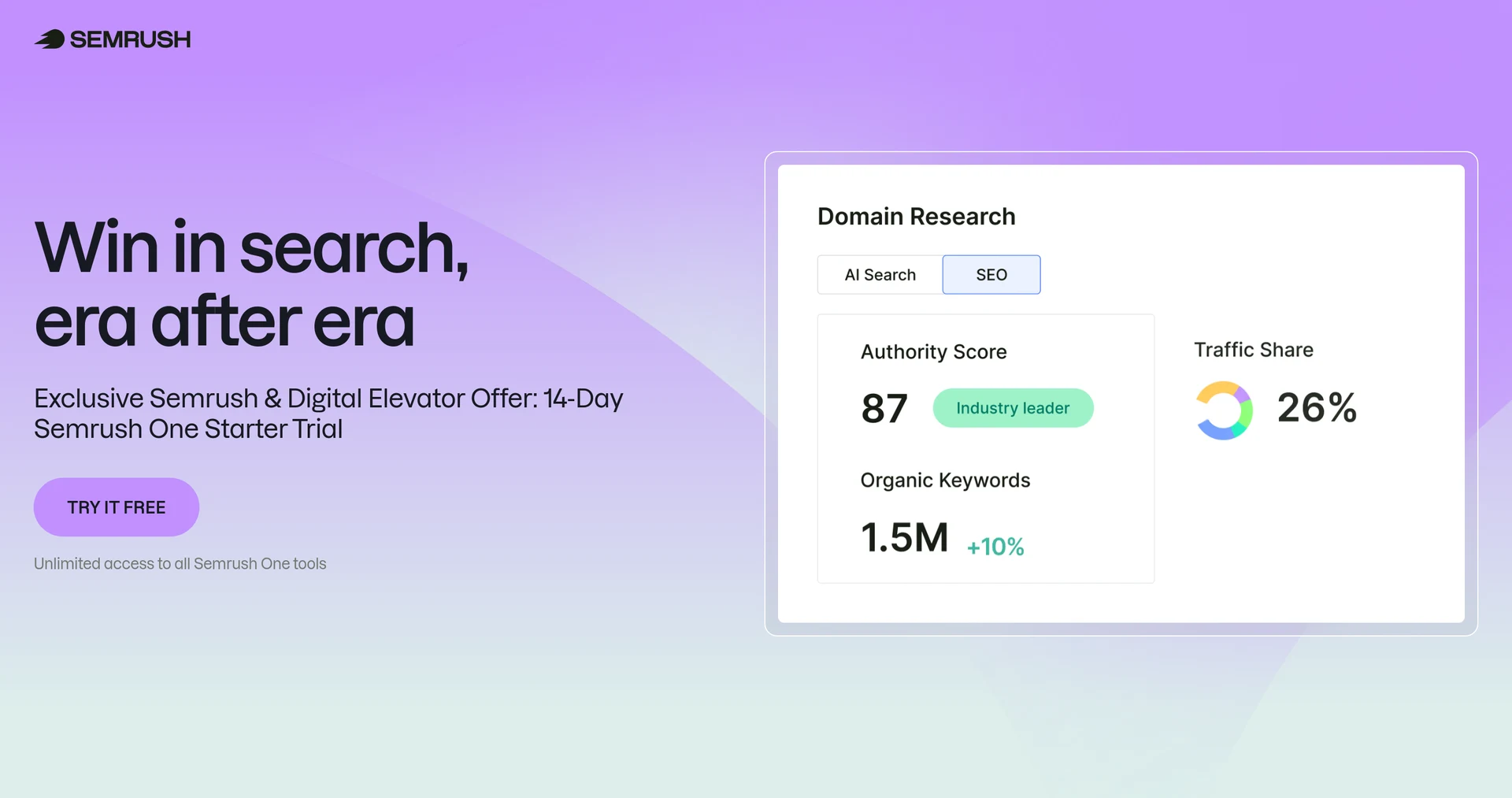
Semrush brings traffic, keywords, and ads into one place so you can compare competitors without juggling platforms. You see which pages drive visits, which search terms matter, and how paid campaigns shift month to month. The reporting works for weekly check-ins as well as quarterly planning. Most teams can start here and add niche tools later.
Competitive intelligence for AI search
Traditional competitive research stops at Google. A growing share of buyer research now happens inside ChatGPT, Perplexity, and AI Overviews, where a competitor can win the recommendation without ever showing up in a SERP you track. Semrush’s AI Visibility Toolkit closes that gap and turns AI answers into a channel you can measure:
- Visibility Score — one benchmark for how often AI assistants surface your brand versus your rivals
- Prompt Tracking — monitor the specific buyer questions you want to own and see who gets named in the answer
- Competitor benchmarking — side-by-side share of answers against the same rivals you already track for traffic and keywords
- Sentiment and share of voice — how often you get mentioned, and whether the mention helps or hurts
- Cross-platform coverage — ChatGPT, Google AI Overviews, Google AI Mode, Gemini, and Perplexity in one dashboard
That data is the input for the work itself. Our AI Visibility product uses this kind of prompt-level tracking to find the questions where competitors get recommended and you do not, then fix the coverage gaps behind it.
Pros:
- Broad coverage across traffic, keywords, ads, and AI search
- Clear trend reports
- Strong page-level insights
Cons:
- Time-consuming setup
- Expensive add-ons
Starting Cost: See current Semrush pricing
Similarweb- Best for all-in-one digital landscape intelligence
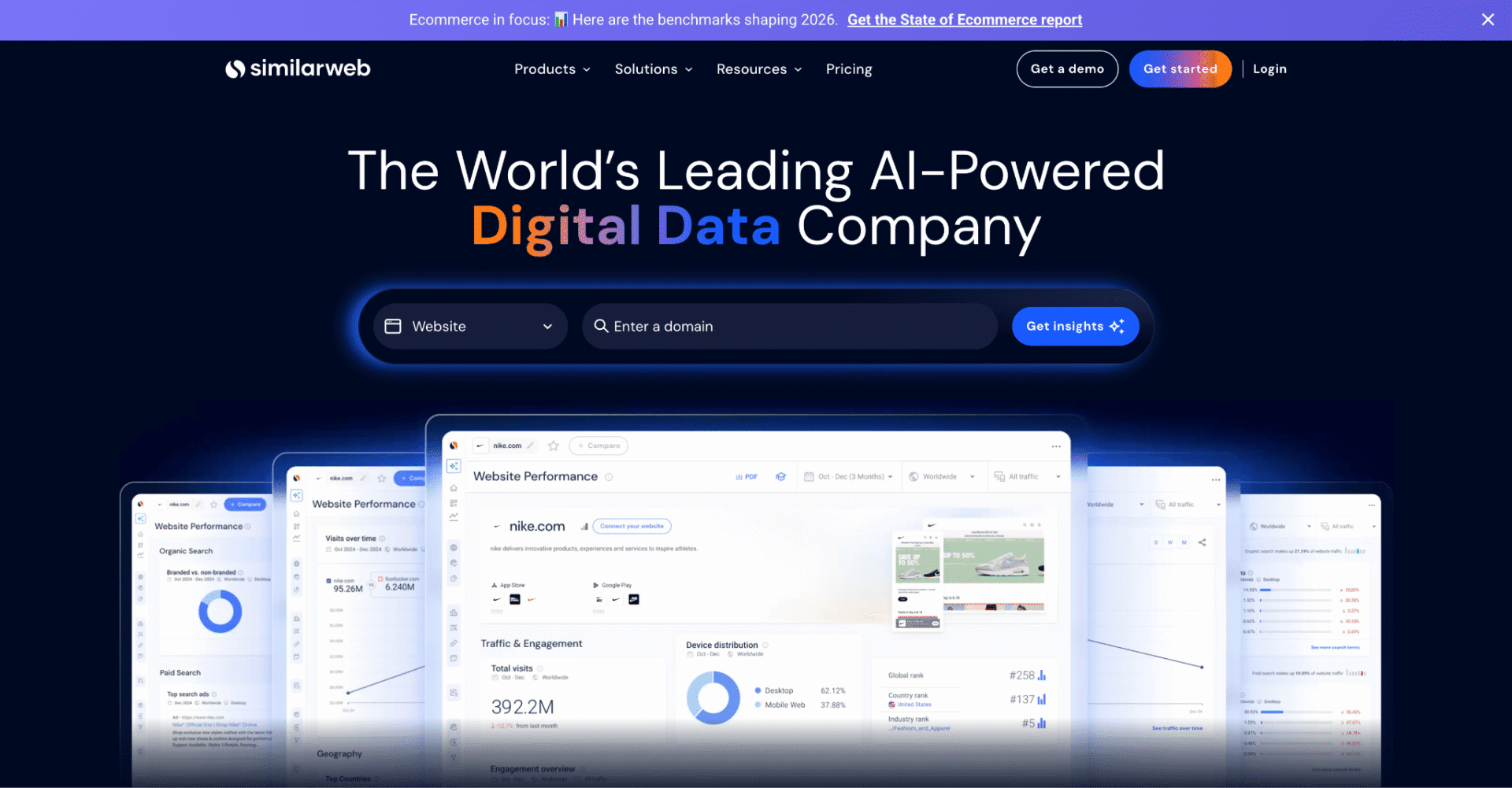
Similarweb estimates total visits across sites so you can see category leaders and channel mix quickly. It helps with market sizing, seasonality checks, and spotting fast-rising rivals. The monthly views make goal-setting easier for leadership and marketing alike. Use it when you need a top-down picture before picking tactics.
Pros:
- Quick market share snapshots
- Channel mix breakdowns
- Executive-ready charts
Cons:
- Limited page detail
- Expensive at higher tiers
- Modeled data
Starting Cost: $199/month
Platforms like SimilarWeb also help teams validate assumptions before committing to strategy. By comparing category benchmarks, spotting seasonality patterns, and assessing whether competitors are gaining or losing traction, these tools give marketers a reliable starting point for decision-making.
Ahrefs- Best for SEO deep dives and page ideas
Ahrefs shows which competitor pages pull the most traffic and who links to them. Content Gap reports surface topics your site has not covered yet that others rank for. Historical charts let you spot early momentum on new pages. The Brand Monitoring tool alerts you to new mentions and backlinks, helping you respond and build links quickly. If you want clear next steps for content, outreach, and reputation tracking, this is a strong choice.
Pros:
- Excellent link data
- Simple gap reports
- Useful history
Cons:
- Learning curve
- SEO-centric focus
Starting Cost: $129/month
Klue- Best for sales teams
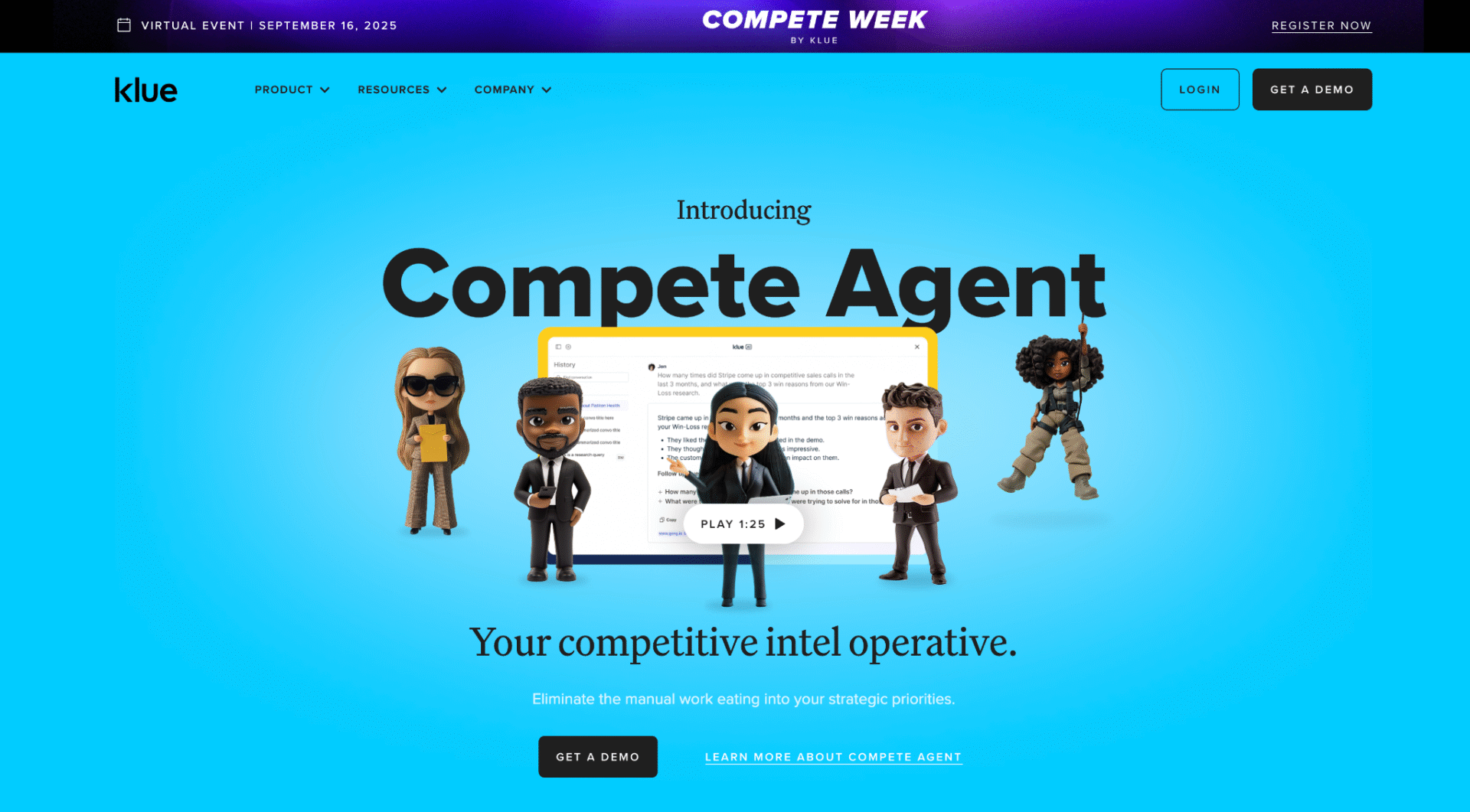
Klue turns research into short battlecards that sales reps can open inside the tools they already use. It keeps pricing updates, product changes, and objection handling in one place, with usage data to show what the field reads. This closes the gap between research and what gets said on calls. Choose it when the goal is to help sales win more often.
Pros:
- Simple guidance
- CRM integrations
- Usage analytics
Cons:
- Requires regular updates
- Geared toward sales teams and takes time to curate
Starting Cost: Custom
Crayon- Best for fast alerts on competitor changes
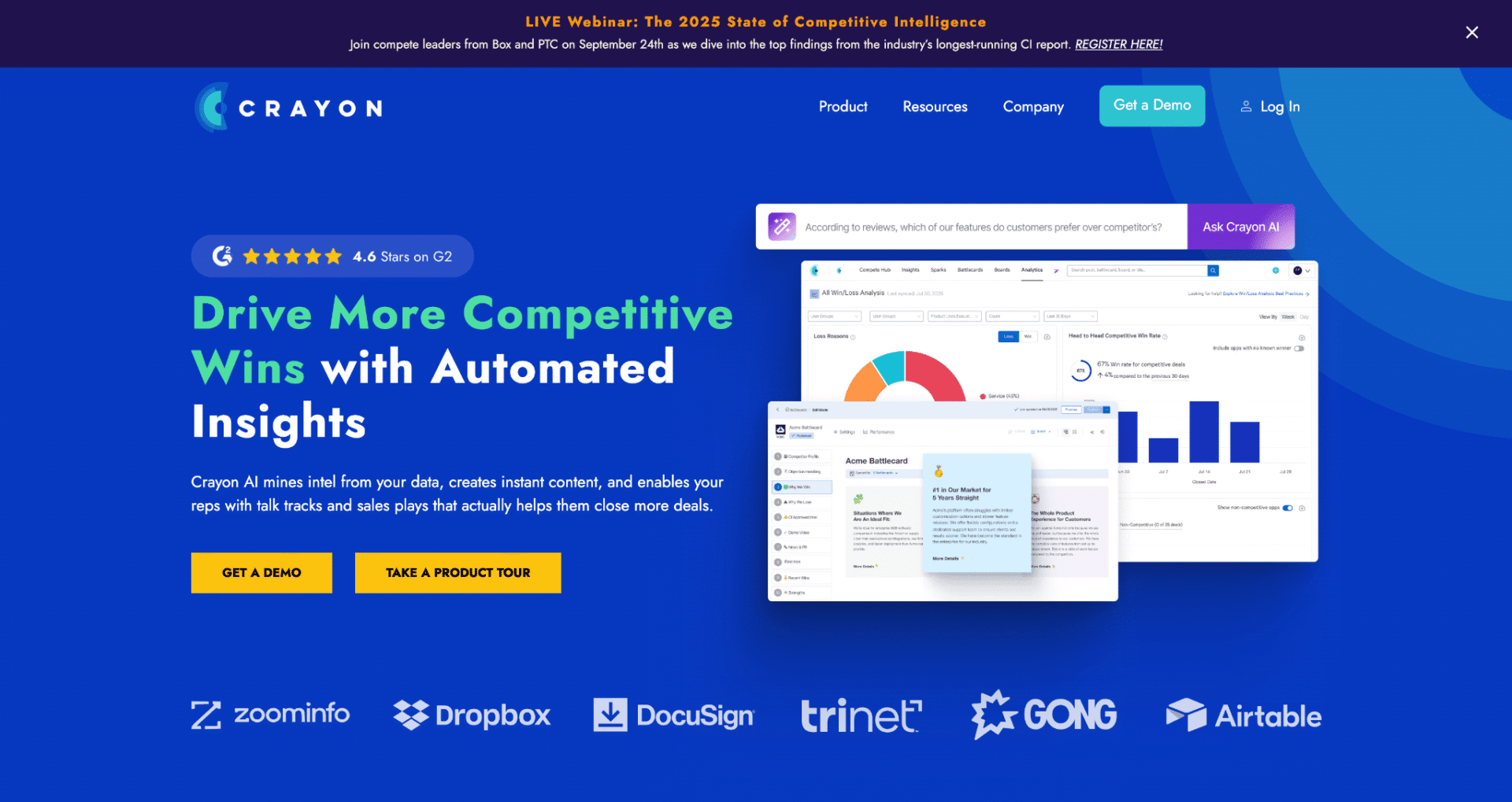
Crayon tracks competitor websites, news, and social media, providing alerts for significant changes such as new product launches, pricing adjustments, or messaging shifts. Routing and tagging keep updates organized so the right people act quickly. It saves hours otherwise spent on manual checks.
Pros:
- Timely alerts
- Less manual monitoring
- Good cross-team visibility
Cons:
- Lighter SEO detail
- Setup for tags and rules
Starting Cost: Custom
BuzzSumo- Best for content ideas
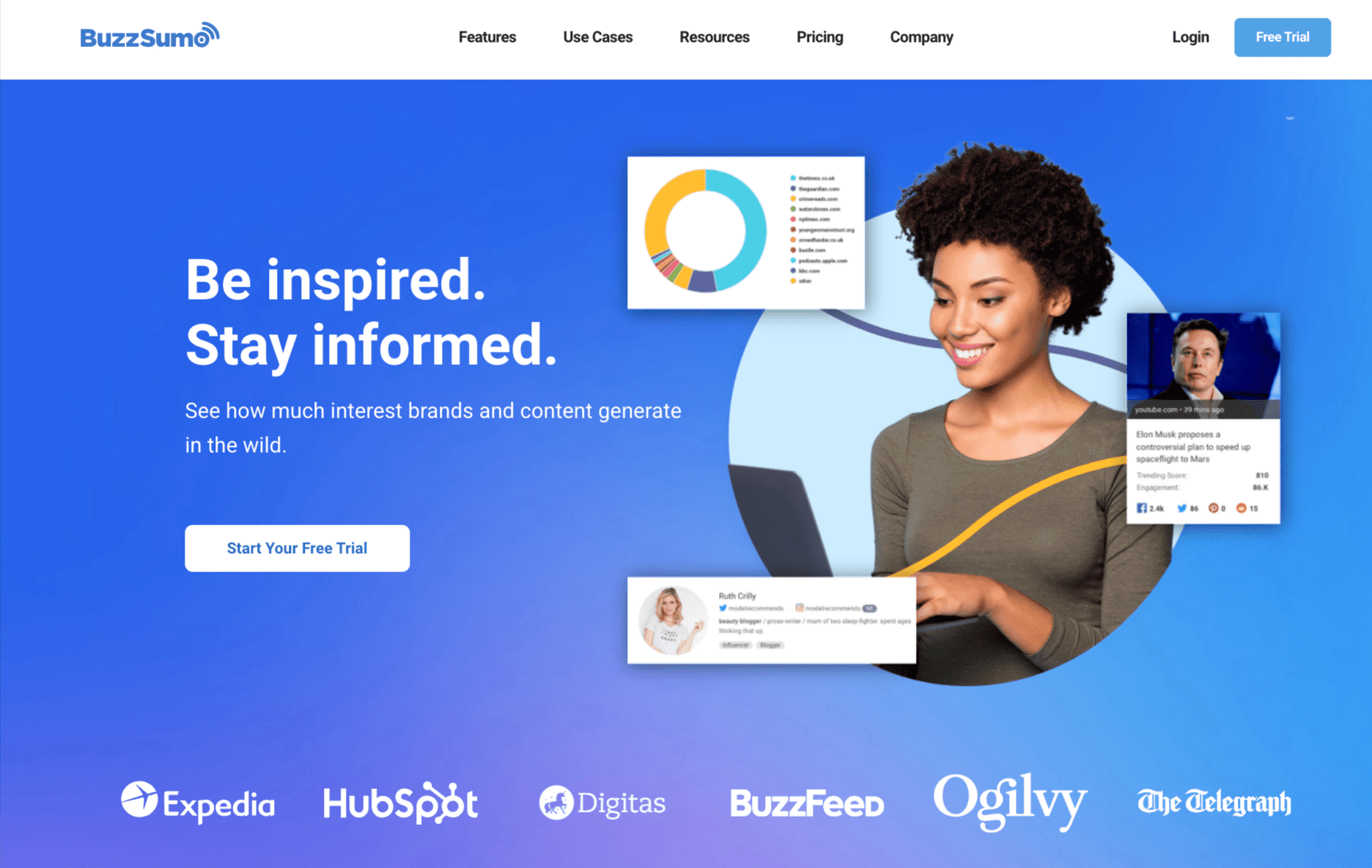
BuzzSumo shows which topics and headlines get shared and who amplifies them. It helps you plan calendars, pitch lists, and launch content that match reader interest. You can also set alerts for brand and competitor mentions to stay current. It pairs well with search tools to guide angles and outreach.
Pros:
- Topic validation
- Creator discovery
- Helpful alerts
Cons:
- Narrow content focus,
- Uneven historical coverage by network
- No paid ads data
Starting Cost: $199/month
BuiltWith- Best for tech stack analysis
BuiltWith lists the software running on any site, from analytics to commerce platforms. These details help you tailor messages, choose accounts to target, and estimate switching costs. You can also build prospect lists by technology for campaigns. It is a practical add-on for sales operations and product marketing.
Pros:
- Fast technographics
- ABM list building
- Messaging context
Cons:
- Limited scope beyond technographics
- Some stacks go undetected
- Needs manual verification
- Very expensive starting cost
Starting Cost: $295/month
How to choose the right mix of competitor intelligence tools
Begin with the decision you need to make. If you want to compare traffic and keywords, use Semrush and Ahrefs. If you need a market read across many competitors, use Similarweb. If your priority is helping sales address objections and changes, add Klue and Crayon. For content angles and outreach, use BuzzSumo. For the technology context that guides targeting, keep BuiltWith handy.
Many teams may find that a combination of tools helps to align with their goals.
Affiliate disclosure: some links in this article, including the links to Semrush, are affiliate links. If you start a trial or subscribe through them, Digital Elevator may earn a commission at no extra cost to you. We only recommend tools we use in our own client work, and a commission never buys a spot on this list.
Frequently Asked Questions
What are competitive intelligence tools used for?
Competitive intelligence tools help you compare your site and business against competitors: benchmarking traffic and market share, seeing where competitors' visits come from, tracking changes on their sites and messaging, analyzing their technology stack, and finding the content and keyword topics that work in your market. Teams use them for market sizing, page-level SEO, sales enablement, and content planning.
Do I need more than one competitive intelligence tool?
Often yes. One tool rarely covers market share, page-level SEO ideas, sales enablement, and content planning equally well. A common mix is Semrush or Ahrefs for search and keyword data, Similarweb for market-level traffic share, Klue or Crayon for sales-focused competitor tracking, BuzzSumo for content angles, and BuiltWith for technology profiling.
Which competitive intelligence tools are best for small teams?
Start with Semrush for a broad view of competitors' search and traffic. Add Ahrefs for deeper page ideas and link opportunities, BuzzSumo for content research, and BuiltWith for fast technology checks. This combination covers most small-team needs without the cost of enterprise sales-intelligence platforms.
Are competitive intelligence tools legal to use?
Yes. Reputable competitive intelligence tools rely on publicly available information and provide ethical ways to collect and compare it. They do not require access to a competitor's private systems. The legal and ethical line is using public data for benchmarking and strategy, not attempting to obtain confidential or non-public information.
Founder and CEO of Digital Elevator. 15+ years of marketing experience helping businesses compete and win online, from emerging startups to Fortune 100 leaders.